Kenya has gone three consecutive weeks without recording a new Ebola case, as the Ministry of Health and the World Health Organization (WHO) review the country’s response to the outbreak.
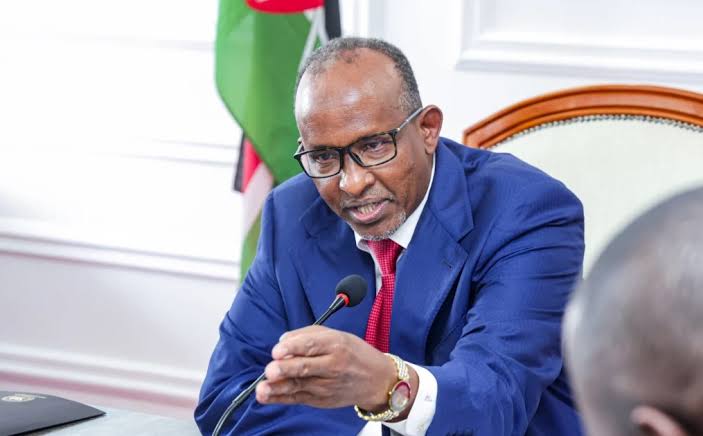
Health Cabinet Secretary Aden Duale held talks with a WHO delegation led by the organisation’s Regional Director for Africa, Prof. Yakub Janabi, to assess progress and agree on further support needed to contain the disease.
Kenya has recorded nine cases of the imported Bundibugyo Ebola virus, all linked to one transmission cluster. Six patients have recovered and been discharged from hospital, two have died, while one is still receiving treatment.
According to the Ministry of Health, there has been no evidence of community transmission.
During the meeting, Duale acknowledged WHO’s support, which has included emergency supplies, personal protective equipment and technical assistance in strengthening the country’s surveillance systems.
He also welcomed the donation of 12 portable PCR testing machines and a 28-bed Ebola Treatment Unit. The equipment and facility are expected to improve Kenya’s ability to test, isolate and treat suspected cases.
The government has also screened more than 772,000 travellers at 28 points of entry. A total of 736 samples have been tested in five designated laboratories, while more than 7,300 healthcare workers have received training.
Kenya prepares for 42-day countdown
With three weeks having passed without a new confirmed case, attention is now turning to the next stage of the outbreak response.
Duale said the 42-day countdown to declaring the outbreak over would begin after the last patient is discharged.
He called for continued surveillance, quick investigations whenever suspected cases are reported and screening of travellers entering the country.
The Health CS also asked WHO to provide more support, particularly in the supply of diagnostic materials, training of health workers and improvement of isolation and treatment facilities in counties considered at high risk.
Both sides discussed how to monitor the 42-day period and conduct an assessment of the response after the outbreak. They also agreed to work towards a coordinated announcement once Kenya meets the required public health conditions for declaring the outbreak over.
Kenya raises concern over travel restrictions
Travel and visa bans were also discussed during the meeting after their imposition by certain countries to Kenya following the Ebola epidemic.
Duale appealed to WHO to involve the countries concerned, explaining that the bans should be based on scientific evidence and the International Health Regulations.
Duale stressed that countries announcing health emergencies should be assisted by the international community.
Beyond the Ebola response, Kenya and WHO discussed cooperation in other areas of the health sector, including Universal Health Coverage through the Social Health Authority.
Other issues included strengthening the Kenya National Public Health Institute, improving the country’s capacity to respond to public health emergencies, local production of medical supplies, sustainable health financing and the use of digital technology in healthcare.
The meeting ended with an agreement to develop a joint Kenya-WHO action plan. It will cover the use of the donated testing equipment, further training for health workers, support for the remaining Ebola response activities and wider health sector priorities.
Among those who attended the discussions were WHO Kenya Country Director Dr Neema Kimambo, Principal Secretary for Public Health and Professional Standards Mary Muthoni, Principal Secretary for Medical Services Dr Ouma Oluga and Director General for Health Dr Patrick Amoth, alongside other ministry officials.