Investigators believe they are closing in on the masterminds of a major drug trafficking ring after uncovering new evidence in a case involving six Iranian nationals arrested off the Kenyan coast.
On Friday, November 14, detectives revealed that they had recovered seven electronic devices including a GPS tracker that could help map out the origins of the drug shipment, the smuggling routes used, and the individuals financing the multibillion-shilling operation.
The findings were presented in court, where prosecutors said early indications show the suspects may be part of a well-organised international cartel that uses the Indian Ocean as a trafficking corridor for synthetic drugs.
The six men were arrested on October 26 after Kenyan security agencies intercepted their unmarked vessel about 630 kilometres off the coast of Mombasa. The operation, carried out with military-style coordination, involved the DCI, the Kenya Navy, the Coast Guard and NACADA, acting on intelligence shared by both regional and global partners.
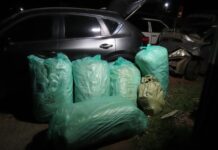
Inside the boat, officers discovered 769 packages of what is believed to be methamphetamine an illicit haul valued at roughly Ksh8 billion.
During Friday’s court session, prosecutors convinced the magistrate to grant an extra 21 days to detain the suspects.
They argued that investigators are still pursuing crucial leads and that releasing the men now could derail a complex, multi-country probe that hinges on sensitive digital evidence and international cooperation.
The case had returned to court after Chief Magistrate Antony Mwicigi requested an update on the men’s welfare, following concerns over their weak appearance in an earlier session. With the new extension, the suspects will have spent a total of 51 days in custody.
The investigation has drawn heavily on international collaboration. INTERPOL played a central role in coordinating search operations and preserving the integrity of evidence, while intelligence from the Regional Narcotics Interagency Fusion Cell (RNIFC) in Bahrain and the Regional Coordination Operations Centre (RCOC) in Seychelles helped track the suspicious vessel.
Interpol later confirmed that U.S. Naval Criminal Investigative Service (NCIS) officers were part of the mission, assisting with communication and search efforts, supported by the U.S. government.
Following the arrest, a multi-agency command team chaired by the Deputy Commander of the Kenya Navy was immediately activated. The seized substances have since been forwarded to the Government Chemist for testing to determine their composition and purity.
As detectives continue to analyse digital data and coordinate with international partners, the case is expanding revealing what appears to be a far-reaching criminal network whose true scale may only now be coming to light.