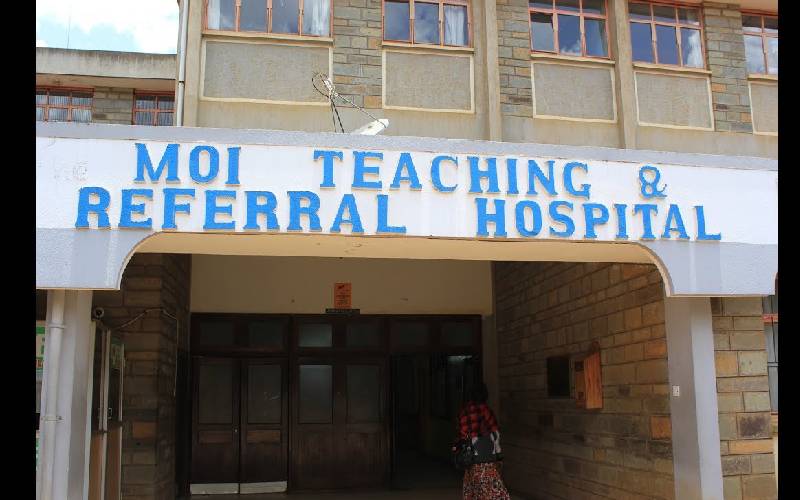
Moi Teaching and Referral Hospital (MTRH) in Eldoret has placed one person under 21-day monitoring as a precaution following contact tracing linked to Kenya’s Ebola outbreak.
The individual is being monitored to establish whether they develop symptoms of the disease. Hospital officials have clarified that being placed under quarantine does not mean a person has tested positive for Ebola.
MTRH Chief Executive Officer Dr Philip Kirwa said the individual was identified through contact tracing involving confirmed cases.
“We have no Ebola-infected patients. Quarantine is not equal to being an infected person,” Kirwa said.
The move comes as health authorities intensify efforts to trace people who may have been exposed to the Bundibugyo strain of Ebola, which was confirmed in Kenya in October.
According to a Daily Nation report published on Wednesday, October 21, the person placed under quarantine at MTRH was among contacts initially unaccounted for after Kenya reported its first case.
Authorities were also searching for a Ugandan national whose whereabouts remained unconfirmed at the time, raising concerns about the challenges facing cross-border contact tracing.
Kenya confirmed its ninth Ebola case on October 20, involving a 24-year-old man who was identified as a close family member of the first patient.
Health Director-General Dr Patrick Amoth said the man tested positive on October 19 after developing symptoms while in quarantine.
The first patient, a Kenyan national who had been living in the Democratic Republic of Congo, arrived in Nairobi on October 3 and later died. The Ministry of Health confirmed the infection on October 6.
The 21-day monitoring period is used because Ebola symptoms can take up to three weeks to appear after exposure. People identified as contacts are monitored for symptoms so that any infection can be detected and treated promptly.
The Ministry of Health has urged Kenyans to remain vigilant without panicking. Anyone experiencing symptoms such as fever, unusual tiredness, muscle pain, sore throat, vomiting, diarrhoea or unexplained bleeding should seek medical attention immediately.
Members of the public can also call the Ministry of Health’s toll-free line 719 for guidance.