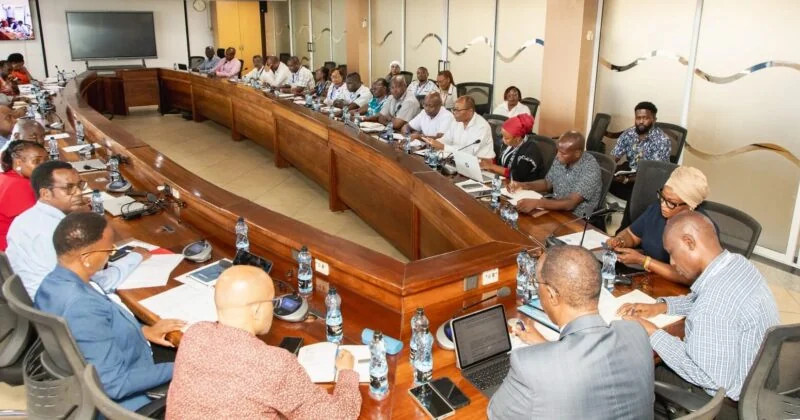
The Ethics and Anti-Corruption Commission (EACC) has started reviewing Kenya Ports Authority (KPA) operations to identify gaps that could allow corruption to take place at the Port of Mombasa.
The exercise comes at a time when the port is facing renewed scrutiny over delays, high operating costs and other challenges affecting cargo clearance.
EACC Commissioner John Ogallo launched the review at KPA headquarters in Mombasa on Tuesday, November 10, saying the commission would examine the authority’s systems, policies, procedures and practices.
The review will seek to establish weaknesses in the way the port is managed and recommend changes to improve accountability and prevent corruption.
Speaking during the launch, Ogallo said the Port of Mombasa was important to Kenya and neighbouring countries because it serves as a major link to international markets.
He noted that delays and weaknesses in port operations have a direct effect on the movement of goods, the cost of doing business and regional trade.
“An integrity-driven port need not be a slow port. In fact, a port supported by transparent, efficient and reliable systems is better positioned to facilitate legitimate trade, protect public revenue and inspire confidence among investors and businesses,” Ogallo said.
KPA welcomed the review, saying it would provide an opportunity to strengthen internal controls and promote ethical conduct among staff.
The authority’s Corporation Secretary and General Manager for Board and Legal Services, John Turasha Kinyanjui, said integrity should be central to its operations, considering its role in managing key national infrastructure and facilitating international trade.
Kinyanjui represented KPA Managing Director Captain William Ruto at the launch.
World Bank Report Highlights Port Challenges
The EACC exercise follows a World Bank report that raised concerns about the performance of the Port of Mombasa.
In its November 2026 Kenya Economic Update, the lender reported that the port had fallen 49 places in the global Container Port Performance Index, from position 326 in 2022 to 375 in 2024.
Among the issues that the report pointed out were congestion, delays, several cargo inspections, systems’ downtime and increase in costs as some of the challenges faced by the companies using the port.
Further on, there were claims of bribery that involved officials from the concerned government departments that oversee the clearance of cargo. In some cases, the businesses indicated that they had to pay bribes to get their goods cleared.
The bank was particularly concerned about the changes in leadership of KPA. The port authority reportedly had five managing directors within the last decade, two of whom were acting directors in 2020 and 2023.
The EACC review will help to prevent the weaknesses in the institution that can be exploited, instead of waiting for the corrupt acts to happen.
It is expected that the recommendations from EACC will be helpful in closing up the gaps.