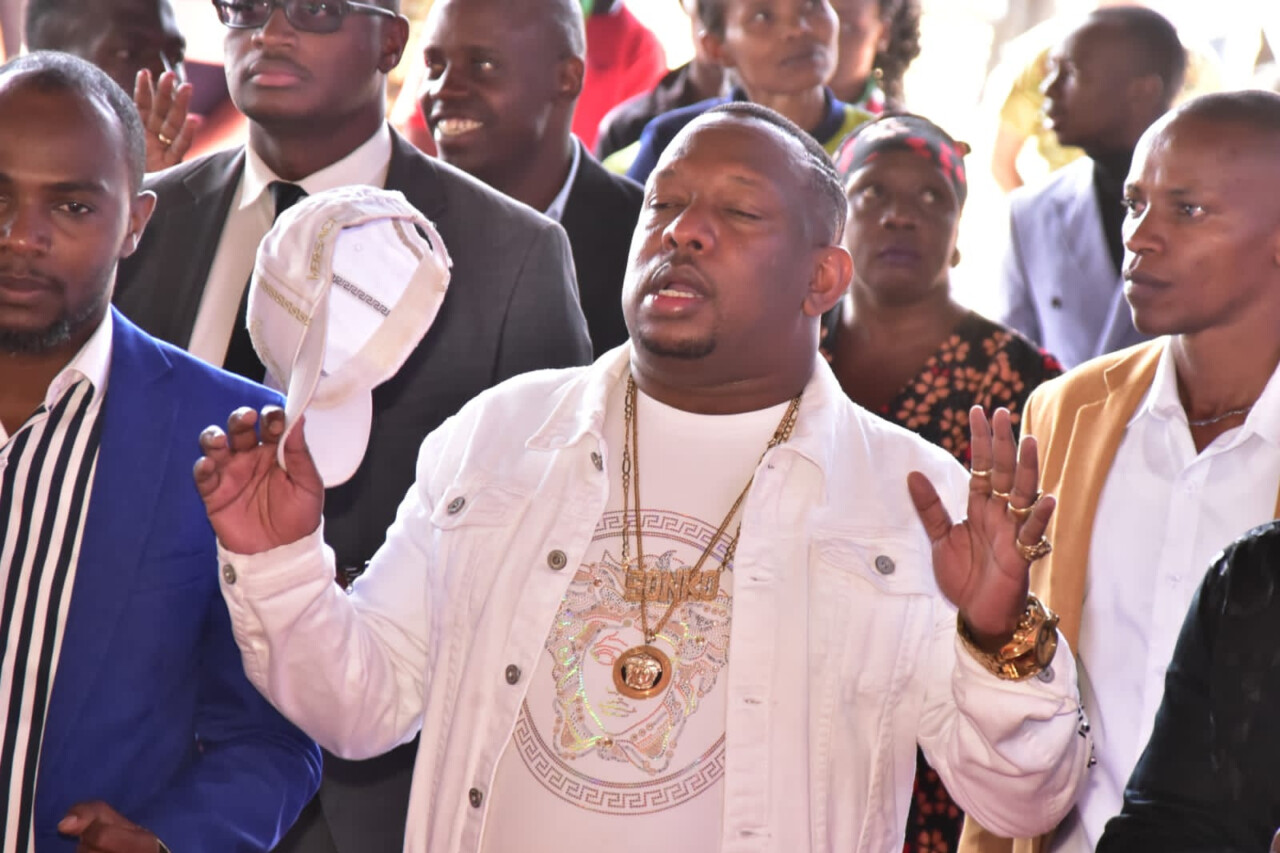
When Mike Mbuvi Sonko was impeached as Governor of Nairobi, the move was presented as a matter of accountability and governance.
But behind the headlines lay a web of money, political intrigue, and raw power struggles that stretched from City Hall to State House.
An investigation into his downfall reveals a clash between a populist governor determined to expose the flow of billions and a national government keen on control.
The Security Committees and the Ruai Sewage Dispute
The earliest cracks in Sonko’s relationship with the establishment began when he sat on national security committees. These forums—usually reserved for senior state officers—gave him a front-row seat to decisions that directly affected Nairobi residents.
One contentious project involved a powerful land-owning group known as Northlands, linked to influential families. The plan was to lay a sewage line through Ruai, an area inhabited by hundreds of thousands of people. Critics argued that the move would result in mass evictions, while supporters framed it as a modern infrastructure project.
Sonko resisted. He saw it as an assault on his constituents and vowed to protect them. His opposition reportedly drew the ire of senior government officials, including then–Interior CS Fred Matiang’i. From that point, sources close to Sonko say, he became a marked man.
The Money Trail: 60 Million and State House Drama
The turning point came when large sums of money began flowing into his office. According to Sonko’s account, one day 60 million shillings was delivered to him in cash.
Instead of concealing it, he did the unthinkable—he called his close ally Elkana to document the transaction and then drove straight to State House.
There, he confronted President Uhuru Kenyatta with the cash, telling him: “This is today’s collection.” To reinforce his point, Sonko also phoned Deputy President William Ruto, who allegedly assigned him an intelligence team to safeguard his office.
The following day, another 70 million shillings was brought in. Sonko took this as confirmation of his long-standing claims—that Nairobi was bleeding billions in revenue through corruption, and that cartels were benefiting at the expense of the public.
Digitizing County Revenue and the CashBay System
Determined to clean up City Hall, Sonko introduced a digitized revenue collection scheme known as the CashBay system. The initiative reduced leakages and increased accountability. For the first time, county salaries were being paid promptly—by the 25th of every month.
But what Sonko viewed as reform, others saw as a threat. The national government was alarmed at the sudden transparency and the sheer volume of cash circulating within the county.
Pressure mounted for the revenues to be centralized at the Central Bank of Kenya (CBK), stripping the county of direct control over its own funds.
This marked the beginning of a fierce financial tug-of-war. According to Sonko, “When the government saw this money, they said it should be sorted to CBK. We fought so many battles.”
Political Bargains and Shifting Allegiances
As the conflict escalated, the political undertones became clearer. President Uhuru Kenyatta reportedly advised Sonko to step aside from Nairobi politics and instead seek office in Mombasa under the Wiper Party ticket of Kalonzo Musyoka.
To sweeten the deal, Sonko says he was given another 70 million shillings, of which he personally pocketed 20 million. But the move created new tensions and resentment within his camp.
Many county employees lost their jobs as the transition plans faltered, and allies began to abandon him.
Even so, Sonko launched campaigns in Mombasa, gaining traction and notoriety. His flamboyant style and populist message once again drew large crowds, making him both a threat and an enigma to the establishment.
The Courts and the “Deep State” Factor
The legal battles soon took center stage. A three-judge bench was convened to decide whether an impeached governor could vie for elective office. The ruling came in Sonko’s favor—technically allowing him to contest despite the impeachment.
But the reprieve was short-lived. The so-called “deep state” moved swiftly to counteract the ruling, ensuring fresh hurdles were placed in his path. New legal interpretations and political maneuvering undermined his chances.
Still, Sonko refused to retreat. He escalated the fight beyond Kenya’s borders, filing a case at the East Africa Court of Justice. His hope was that a regional ruling could overturn the impeachment and revive his political career.
But in the end, Kenya’s Supreme Court declared the impeachment final, sealing his fate and drawing a curtain on his turbulent governorship.
The Bigger Picture: Reform or Resistance?
For his critics, Sonko’s fall was inevitable—a chaotic leader undone by his own excesses and lack of administrative discipline. For his supporters, however, the impeachment was less about misconduct and more about his defiance against powerful interests.
His exposure of daily cash collections, his digitization of county revenues, and his refusal to endorse projects like the Ruai sewage line positioned him as a disruptor in a system accustomed to opacity.
In the end, Mike Sonko’s impeachment highlighted a central truth about Kenyan politics: that governance is as much about money and control as it is about service to the people. His downfall may have removed him from office, but the questions he raised about Nairobi’s billions remain unanswered.