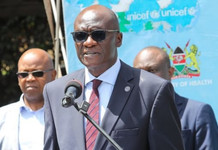
Health Cabinet Secretary Aden Duale has opened fresh talks with the World Bank to deepen support for Kenya’s ambitious Universal Health Coverage (UHC) agenda, with a strong push for investments in emergency response and primary health care.
Duale met with World Bank Kenya officials, led by Dr. Peter Okwero, on Tuesday at Afya House, where they explored new avenues of collaboration under the government’s Taifa Care Model a patient-centered approach aimed at improving access and equity in health care.
Top on the agenda was the urgent need to scale up the country’s blood services network. The CS emphasized that building and equipping regional and satellite blood centers, especially in underserved areas, is vital in lowering maternal deaths and improving emergency care.
“We cannot talk about quality healthcare without access to safe blood, especially for mothers and accident victims,” Duale said, urging for targeted funding to bridge the gap.
Among the key areas Kenya wants support in are:
Establishing a national ambulance dispatch center to enable faster emergency evacuations.
Strengthen primary health care through enhanced community health services, medicine supply systems, and investment in healthcare providers
Accelerating digital transformation in health to expand reach and streamline services, particularly to rural and inaccessible populations.
Utilizing the new Social Health Insurance Fund (SHIF) to protect vulnerable families from health-related financial shocks.
Building climate-resilient health infrastructure to safeguard communities against new climate-related health risks.
Duale appealed to the World Bank team to join in and on Kenya’s reform agenda, giving guarantees of transparency and accountability in project delivery.
“Kenya is prepared for a revolution in health and we are looking for partners who will walk with us, listen to our needs and invest in actionable sustainable systems that benefit everyone,” the CS clarified.
The World Bank has financed various projects within Kenya’s health sector, including maternal and child health, infrastructure, and pandemic prevention in the past. As the UHC momentum builds, the government anticipates this partnership will unlock money and brains to deliver quality, affordable healthcare to all Kenyans.