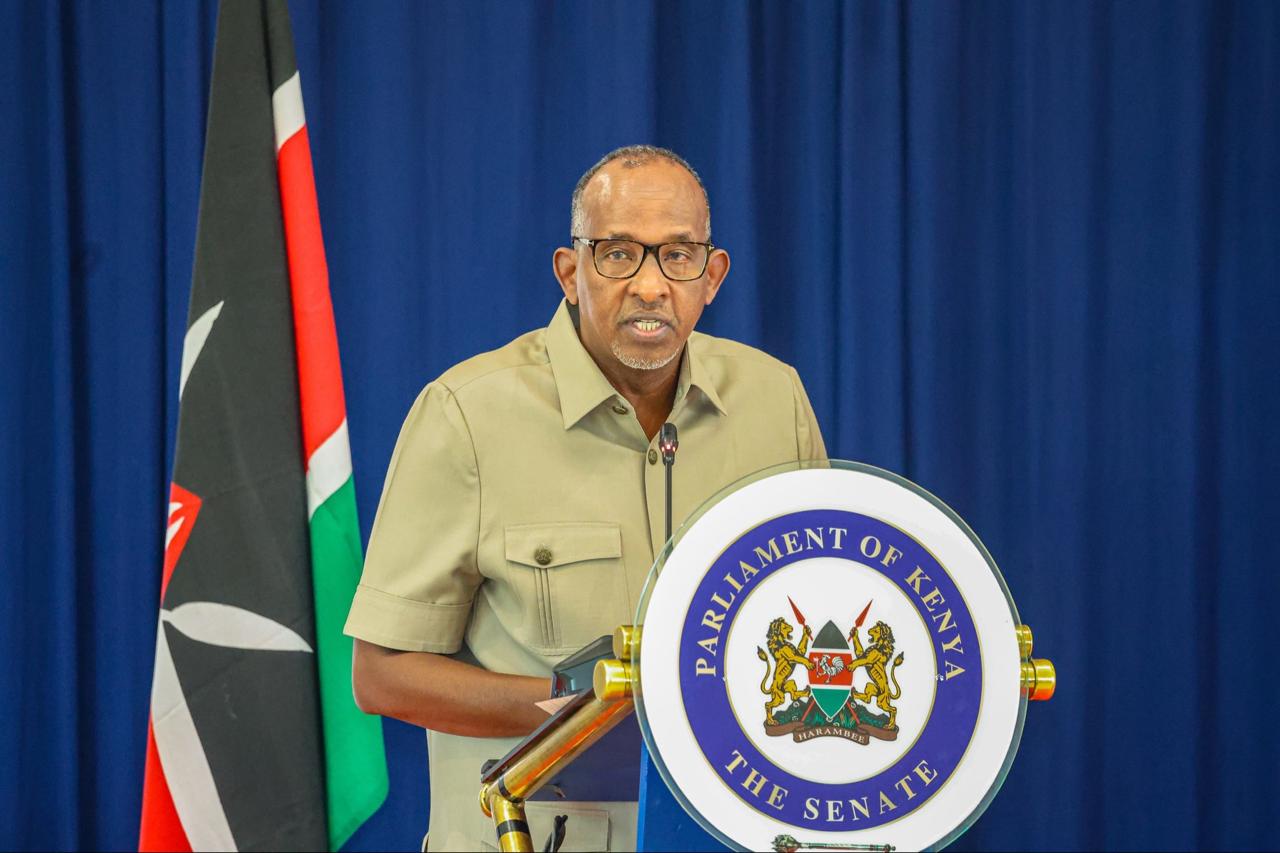
Cabinet Secretary in the Ministry of Health Aden Duale has updated the Senate on the progress of the government’s reforms in the healthcare sector, stating that the country is making steady progress towards the attainment of Universal Healthcare Coverage.
In an update delivered at the Senate Assessment and Planning Retreat, Duale pointed out that the devolution strategy has played an important role in the expansion of access to healthcare services in the country. For instance, the CS pointed out that the 47 counties in the country have functional Level 4 and Level 5 hospitals, meaning that specialized healthcare services have been brought closer to the people.
According to the Cabinet Secretary, the reforms in the healthcare sector have been informed by four key laws, namely the Social Health Insurance Act, the Digital Health Act, the Primary Health Care Act, and the Facility Improvement Financing Act. These, according to the Cabinet Secretary, are the legal foundation for the reforms that the government is undertaking in the healthcare sector.
In terms of healthcare financing, the Cabinet Secretary pointed out that the Social Health Authority (SHA) has successfully enrolled millions of Kenyans, who continue to have their money paid out to healthcare providers after making their contributions.
In addressing the issue of the 12.7 billion that had been raised in the recent past, the Cabinet Secretary pointed out that the figure represents claims made by individuals, which were rejected by the system and, therefore, not paid out.
In the update, the Cabinet Secretary also pointed out the government’s plan to roll out the program of providing free healthcare services at Level 2 and Level 3 healthcare facilities, with the plan being to reduce the amount of money that the people of Kenya have to pay out of their pockets for healthcare services.
He also highlighted the “Lipa SHA Pole Pole” option, which he said is a payment plan that enables those in the informal sector to contribute gradually to remain under the country’s insurance programme.
For digital reforms, the CS said that thousands of health facilities are now connected to TaifaCare, which also comes with a fraud detection tool to help improve transparency in the utilization of funds.
He also said that the government has invested heavily in improving the country’s human resource in the sector. He pointed to the formal recognition and digitisation of 107,000 Community Health Promoters, who play a key role in delivering services at the grassroots. He added that reforms are also ongoing to improve medical equipment supply and expand access to specialised services.
The CS called on lawmakers to continue supporting the reforms through legislation and budget allocations, saying the goal is to build a health system that is transparent, sustainable and accessible to all.
The session was chaired by Edwin Sifuna and was attended by Principal Secretary for Medical Services Ouma Oluga, Director-General for Health Patrick Amoth, Council of Governors Health Committee Chair Abdulswamad Sherrif Nassir, Senate Health Committee Chair Jackson Mandago, SHA CEO Mercy Mwangangi and Digital Health Agency CEO Anthony Lenayara.