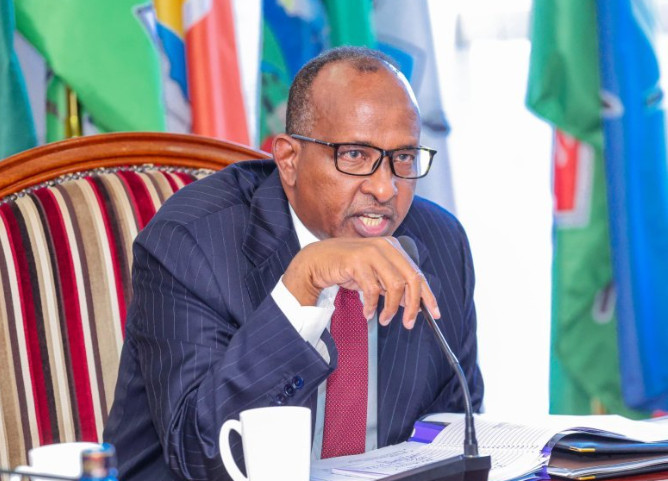
Health Cabinet Secretary Aden Duale has revealed how widespread fraud in hospitals led to KSh11 billion in Social Health Authority (SHA) funds being flagged and withheld.
Speaking before a parliamentary committee on January 28, Duale said the money was not exactly “lost” but consisted of claims rejected by SHA’s fraud detection system after hospitals were found to have submitted suspicious or false medical records.
The CS said the problems surfaced just six months after SHA replaced the now-defunct National Hospital Insurance Fund (NHIF), with several facilities repeating the same questionable practices seen under the old system.
Fraud Detection Flags Unusual Hospital Claims
Duale told MPs that SHA’s new digital system uses artificial intelligence to check claims in real time. The system picked up what he described as “impossible” medical patterns.
“There are facilities in our country that have reported 100% of the mothers who came to deliver have gone through C-section,” Duale said.
He explained that globally, the World Health Organization recommends that only 10 to 15 per cent of births should be by caesarean section. However, some Kenyan hospitals reported that every mother delivered through surgery.
In one case in Tharaka Nithi County, a private hospital claimed that all 500 women who delivered there had C-sections. The system automatically rejected those claims.
Audits also showed that some claim forms appeared to have been filled out by a single person using the same pen and handwriting, instead of being signed separately by patients, doctors, and hospital administrators as required.
“As to where we find, SHA finds, that claim forms are filled by one person, one handwriting, one pen, that is a rejection,” Duale said.
Ghost Patients and Fake Records
The system also detected ghost patients. In one county, records showed a patient visiting a primary healthcare facility up to ten times in a single day.
In Kwale County, investigators found a case where one person had registered 381 dependent children under their SHA account. The matter has now been handed over to the Directorate of Criminal Investigations (DCI).
Other hospitals submitted maternity claims without birth notification documents, which are required whenever a baby is delivered in a health facility. These claims were also rejected.
Duale further said some healthcare workers registered themselves as fake patients to create false claims, while others inflated bills for treatments such as dialysis. The system flagged cases where patients were shown to have had ten dialysis sessions even though SHA only covers two under standard medical guidelines.
Questions Over System Ownership
At the same time, the Auditor General, Nancy Gathungu, raised concerns about the system running SHA. She found that a private consortium, said to have links to an Indian firm, controls the technology platform.
The consortium is reportedly set to collect around KSh11 billion every year from member contributions and hospital claims, yet the government does not fully own the KSh104 billion system.
SHA has now given hospitals 15 days to explain KSh3 billion worth of flagged claims before any payments can be processed.
The Ministry of Health says it has paid over KSh11.4 billion to hospitals since SHA began operations. However, private hospitals under the Rural and Urban Private Hospitals Association (RUPHA) claim they are still owed KSh76 billion.
Duale said the fraud detection system is helping clean up the health insurance sector, insisting that public money will only be paid for genuine services.