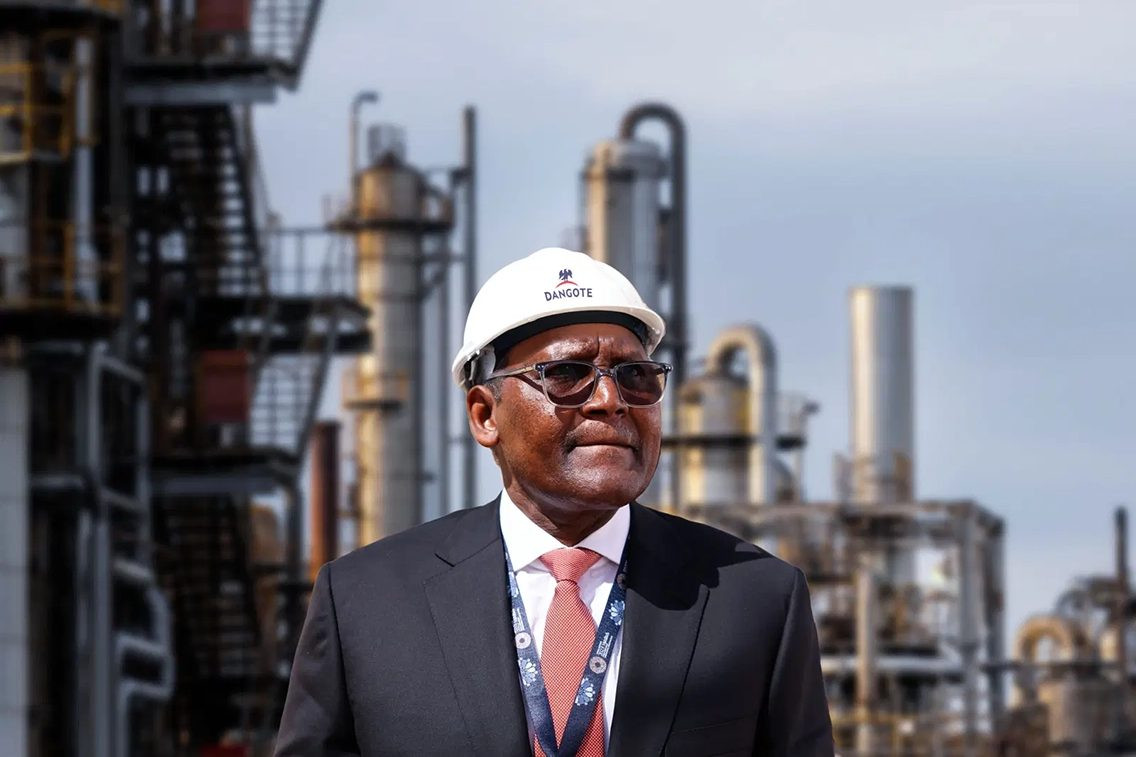
Nigerian billionaire Aliko Dangote wants the Kenyan government to put measures in place to protect his planned KSh2.2 trillion oil refinery in Lamu from cheap imported fuel.
Dangote said the refinery could struggle to compete with petroleum products imported from countries such as Russia and India if Kenya does not protect local production from what he termed as dumping.
The businessman is planning to invest about $16 billion in the project, which he says will be financed through a mix of debt and equity.
About 70 per cent of the investment is expected to come from debt, translating to roughly $11.2 billion, while the remaining 30 per cent will be financed through equity.
Dangote said his group was confident it could raise the money needed to finance the project.
However, he said financing alone would not be enough for the refinery to succeed.
He wants the Kenyan government to provide land, support regional financing and put in place a policy framework that would give the refinery a stable market once it starts production.
The proposed refinery is expected to process between 650,000 and 700,000 barrels of crude oil per day, which would make it one of the largest refineries in Africa.
Construction Could Start in October
Recently, Dangote said that construction of the Lamu refinery may commence in October, with preparations for groundbreaking having started already.
Construction of the project will take less than four years upon commencing.
The cost of the refinery has now been revised down from an initial $17 billion to $16 billion.
According to Dangote, the revision is due to among other factors the shorter construction period as well as experience he acquired while constructing the refinery in Lagos, Nigeria.
The project is expected to make Lamu a major energy and industrial hub while also helping Kenya reduce its dependence on imported refined petroleum products.
The refinery could source crude oil from Uganda, future production from Kenya’s oil fields in Turkana and crude imported through the Port of Lamu.
This would also connect the refinery to the wider regional transport and energy network.
Government Plans Stake
President William Ruto has stated that the government intends to take a shareholding in the refinery via the National Infrastructure Fund.
The government has also set aside KSh21.5 billion as seed money for the project in the 2026/27 fiscal year.
This is part of the government’s efforts to enhance the country’s energy security by reducing reliance on the importation of refined fuels.
The other projects in the Lamu industrial zone involve a proposed KSh12.9 billion palm oil processing plant located at Witu Nyangoro Ranch.
According to the Investment Promotion Principal Secretary Abubakar Hassan, the plant would create 3,000 jobs while reducing the country’s importation of palm oil.
Though the proposed plant promises a number of economic gains, the refinery continues to raise concerns over its economic viability and the environment.
Dangote’s call for government protection has also raised the question of how the refinery would compete in a market where Kenya currently relies heavily on imported petroleum products.
Greenpeace Africa has already threatened legal action over the proposed project, adding another challenge as preparations for construction move forward.