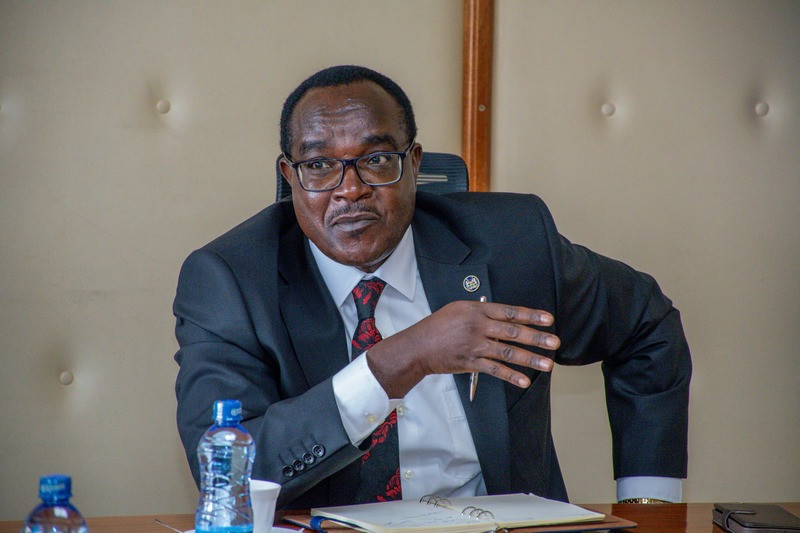
Education Cabinet Secretary Julius Ogamba’s sweeping shake-up of public university councils, announced in a gazette notice on July 25, has sparked debate across the education sector.
The appointments, which touch nearly every major public university in Kenya, are being presented as a bid to “reinforce governance, policy oversight, and institutional stability.” But will this restructuring deliver meaningful change—or is it another round of political recycling in higher education?
To be fair, the move is long overdue. University councils play a crucial role in shaping institutional direction, enforcing accountability, and ensuring the quality of education.
In recent years, many public universities have faced crises—crippling debts, leadership wrangles, and declining academic standards.
If these councils are empowered with visionary and competent members, Ogamba’s intervention could mark the beginning of a turnaround.
However, a closer look at the appointments raises questions. Many of the names are familiar, some having served in various boards and government roles before.
While experience is valuable, reappointing the same faces over and over again risks entrenching the status quo. For instance, Cyrus Gituai retains his position as chairperson of KUCCPS, while figures like Prof P. M. Kutima and Maj Gen (Rtd.) Bashir Yusuf return to leadership roles in other institutions. Are these the only qualified professionals Kenya can produce for university governance?
There’s also the perennial concern of political patronage. University appointments have historically been a soft landing for political allies and retirees.
If these positions are filled based on loyalty rather than merit, the shake-up could simply reinforce systemic inefficiencies rather than resolve them.
That said, Ogamba’s proposal to inject new names into councils—such as Joash Mokamba at Kenyatta University and Prof James Sang at Egerton University—is commendable.
A mix of seasoned professionals and fresh thinkers could inject dynamism into governance structures.
The real test, however, lies ahead. Will these councils be empowered to implement reforms that address financial mismanagement, enhance research capacity, and curb the erosion of academic standards? Or will they remain ceremonial bodies rubber-stamping government directives?
Kenya’s higher education system is at a crossroads. Enrollment is growing, but funding remains inadequate.
Universities are struggling with debts running into billions, while students face uncertain futures. Appointing council members is only the first step; what matters now is whether they can deliver results.
Ogamba’s shake-up must go beyond names on paper. It should usher in a culture of accountability, innovation, and transparency.
Otherwise, this high-profile reshuffle will be remembered as yet another missed opportunity in Kenya’s long journey toward higher education reform.