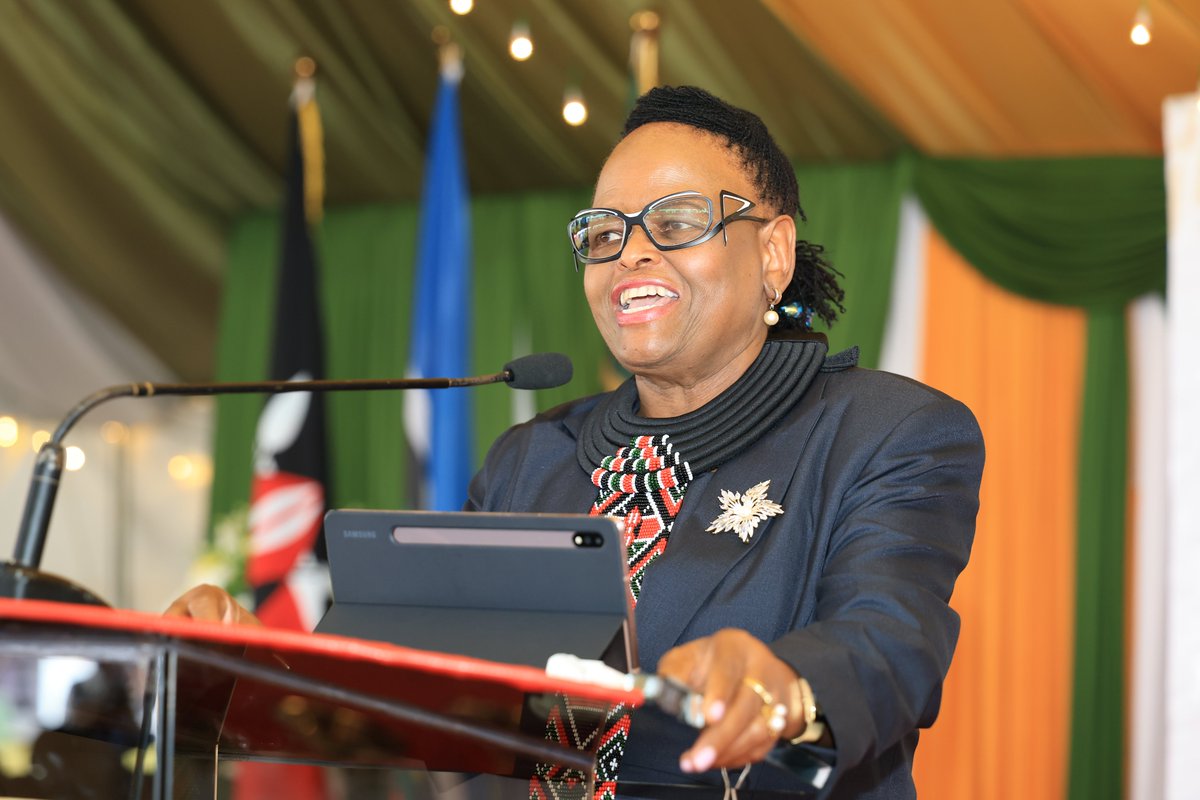
Chief Justice Martha Koome has urged African judiciaries to redefine justice outcomes by embracing people-centred approaches that go beyond traditional court performance measures.
Speaking during the opening of the 4th National Conference on Alternative Justice Systems (AJS) at the University of Embu, CJ Koome said the future of justice in Africa must be anchored on accessible, responsive, and inclusive justice systems guided by African values and the principle of Ubuntu.
She noted that while indicators such as case filings, clearance rates, backlog reduction, and speed of resolving disputes remain important, they do not fully capture citizens’ experiences of justice.
“Justice outcomes must also consider whether relationships have been restored, dignity preserved, and whether people feel heard, respected, and treated fairly,” she said.
CJ Koome emphasized the need for African judiciaries to integrate formal courts, Alternative Dispute Resolution (ADR), restorative justice, community dialogue, and Alternative Justice Systems into a unified justice ecosystem.
She said such an approach would ensure that justice systems are culturally grounded, gender-responsive, inclusive, and capable of delivering not only legal decisions but also healing, reconciliation, and social cohesion.
During the conference, CJ Koome launched the Embu Alternative Justice Systems Centre and AJS Registries for Embu, Siakago, and Runyenjes Law Courts at Embu Law Courts.
The launch was witnessed by 12 Chief Justices from African countries attending the conference.
Justice Must Restore Dignity and Rebuild Trust
The Chief Justice said justice should not only focus on resolving disputes but also address the human impact of conflicts.
She challenged stakeholders to consider whether justice systems are restoring relationships, healing communities, rebuilding trust, and promoting peace.
The conference, themed “Data-Driven Pathways for People-Centred Justice in Kenya,” called for a broader assessment of justice success beyond efficiency and case resolution numbers.
CJ Koome cited the African Union’s Agenda 2063 and Transitional Justice Policy, noting that justice in Africa must extend beyond formal adjudication to include reconciliation, restoration of dignity, and strengthening community bonds.
CJ Koome said Alternative Justice Systems represent an important expression of African jurisprudence, drawing from the continent’s history, cultures, and community-based approaches to resolving disputes.
“For generations, elders and community leaders across Africa have helped families and communities resolve disputes, restore relationships, and preserve social harmony,” she said.
She added that the future of justice will be found not only in courtrooms but also in communities, dialogue, reconciliation, and systems that place people at the centre.
DCJ Mwilu Calls for Data-Driven Justice Reforms
Deputy Chief Justice Philomena Mwilu urged justice sector stakeholders to build systems that measure success through meaningful social impact.
She said achieving this goal requires stronger partnerships between the Judiciary, county governments, academia, civil society, development partners, and communities.
Mwilu emphasized the importance of better data, evaluation, and continuous learning to ensure reforms remain focused on justice seekers.
Chief Justice of Zambia and Chairperson of the African Chief Justice ADR Forum, Dr Mumba Malila, called on judges to actively promote Alternative Dispute Resolution as provided for in constitutional frameworks.
He said AJS and ADR mechanisms can expand access to justice while preserving social cohesion and supporting economic growth by reducing prolonged litigation.
“As society evolves, so must our justice systems. We must embrace a multi-door courthouse approach that creates a clear connection between ADR and the economies of our countries,” Malila said.