By Nancy Wangare
A proposal by a Migori Member of County Assembly (MCA) to extend Kenya’s presidential term limit beyond the current two-term cap has reignited debate over constitutionalism, democratic governance and the future of political leadership in the country.
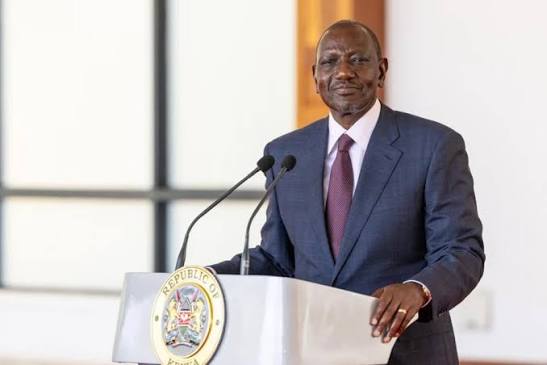
Migori MCA George Omamba has suggested that President William Samoei Ruto should be allowed to serve beyond the constitutional limit, arguing that the Head of State’s development agenda requires more time to be fully implemented.
Speaking on July 13, Omamba praised the Kenya Kwanza administration’s development record, saying continuity in leadership would help sustain ongoing economic and infrastructure programmes.
“President Ruto has delivered significant development, and the country should consider extending the presidential term limit beyond two terms,” Omamba said.
The proposal has attracted widespread attention as it touches on one of the most protected provisions of Kenya’s Constitution. Article 142 of the Constitution of Kenya 2010 limits a president to a maximum of two five-year terms, a safeguard introduced to strengthen democratic institutions and promote peaceful transitions of power.
Legal experts note that any attempt to alter presidential term limits would require a constitutional amendment process involving Parliament and, given the nature of the provision, would likely require approval through a national referendum.
Constitutional lawyer Kivutha Kibwana has previously argued that presidential term limits exist to safeguard democratic governance rather than serve individual political interests.
“Term limits are intended to prevent the concentration of power and ensure regular democratic transition,” Kibwana has previously stated during constitutional discussions.
Political analyst Herman Manyora observes that debates over presidential tenure often emerge midway through an administration as political allies and rivals begin positioning themselves ahead of future elections.
“Such proposals are political statements that test public opinion and shape future political conversations, even when constitutional changes remain difficult to achieve,” Manyora has previously argued.
Supporters of Omamba’s proposal contend that long-term programmes such as affordable housing, infrastructure expansion and economic reforms benefit from continuity in leadership and policy implementation.
Critics, however, warn that altering presidential term limits could weaken constitutional safeguards established after years of political reform. Civil society groups have consistently argued that Kenya’s democratic stability depends on respecting constitutional provisions and ensuring regular transitions of power through free and fair elections.
The debate comes as political activity ahead of the 2027 General Election gathers pace, with both government and opposition figures increasingly shaping narratives around governance, accountability and development.
Whether Omamba’s proposal gains wider political traction remains uncertain. However, any attempt to amend presidential term limits would almost certainly attract intense legal scrutiny, political contestation and public debate given the significance of the issue in Kenya’s constitutional order.