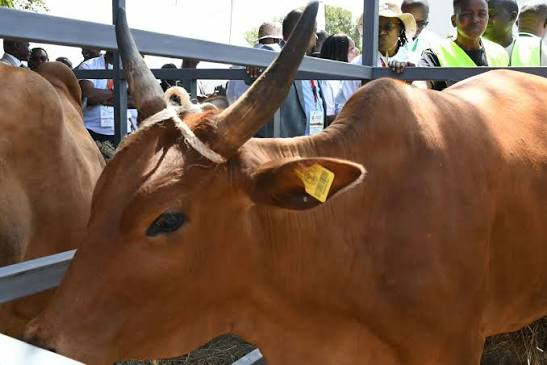
The government is pushing for every cow, goat and sheep in Kenya to have a digital identity as part of a new plan to tackle livestock theft and improve the way animals are tracked.
Agriculture and Livestock Development Cabinet Secretary Mutahi Kagwe said the government is rolling out the Animal Identification and Traceability System (ANITRAC), which will give animals unique identities and keep records of their ownership and movements.
The system will capture details such as where an animal came from, its owner, health status, vaccination history and places it has been moved to.
Animals can be identified using ear tags and microchips, with the information stored on a central digital platform.
The records will be available to authorised users, including government officials, veterinarians, traders and abattoirs.
Kagwe said the system would help farmers prove ownership of their animals and make it harder for stolen livestock to find its way into the formal market.
“Going forward, every Kenyan animal should have an identity and a traceable history,” Kagwe said.
He said the system would also help the government monitor diseases and improve the safety of meat and other livestock products.
The move comes as cases of livestock theft and cattle rustling continue to affect farmers and pastoralist communities in different parts of the country.
For families that depend on livestock, losing animals can mean losing a major source of income built over many years. In some areas, attempts to recover stolen animals have also resulted in clashes and put the lives of security officers and residents at risk.
With ANITRAC, authorities will be able to check an animal’s records before it is sold or taken to an abattoir. Animals whose ownership or movement details do not match could be stopped for further checks.
In addition, the digital documentation can be useful in case of disease outbreaks. In such situations, it would be possible to track the source of the infected animal and the other animals that might have been exposed to the infection.
The digital documentation project is part of the government’s efforts to increase Kenya’s livestock and meat exports.
International customers are becoming more interested in knowing the history of the animals as well as the health of the livestock and meat products prior to purchase.
In addition to the digital documentation project, Kagwe has encouraged farmers to invest in superior breeds of livestock, artificial insemination, animal nutrition, commercial feedlots and livestock insurance.
The success of the project depends on whether the farmers in remote locations can access and make use of the digital system.
The government will also have to ensure that livestock owners understand the registration process and that their personal and animal records are properly protected.
For farmers and pastoralists, the bigger test will be whether the new system can make it harder for stolen animals to be sold and help them recover their livestock when theft occurs.