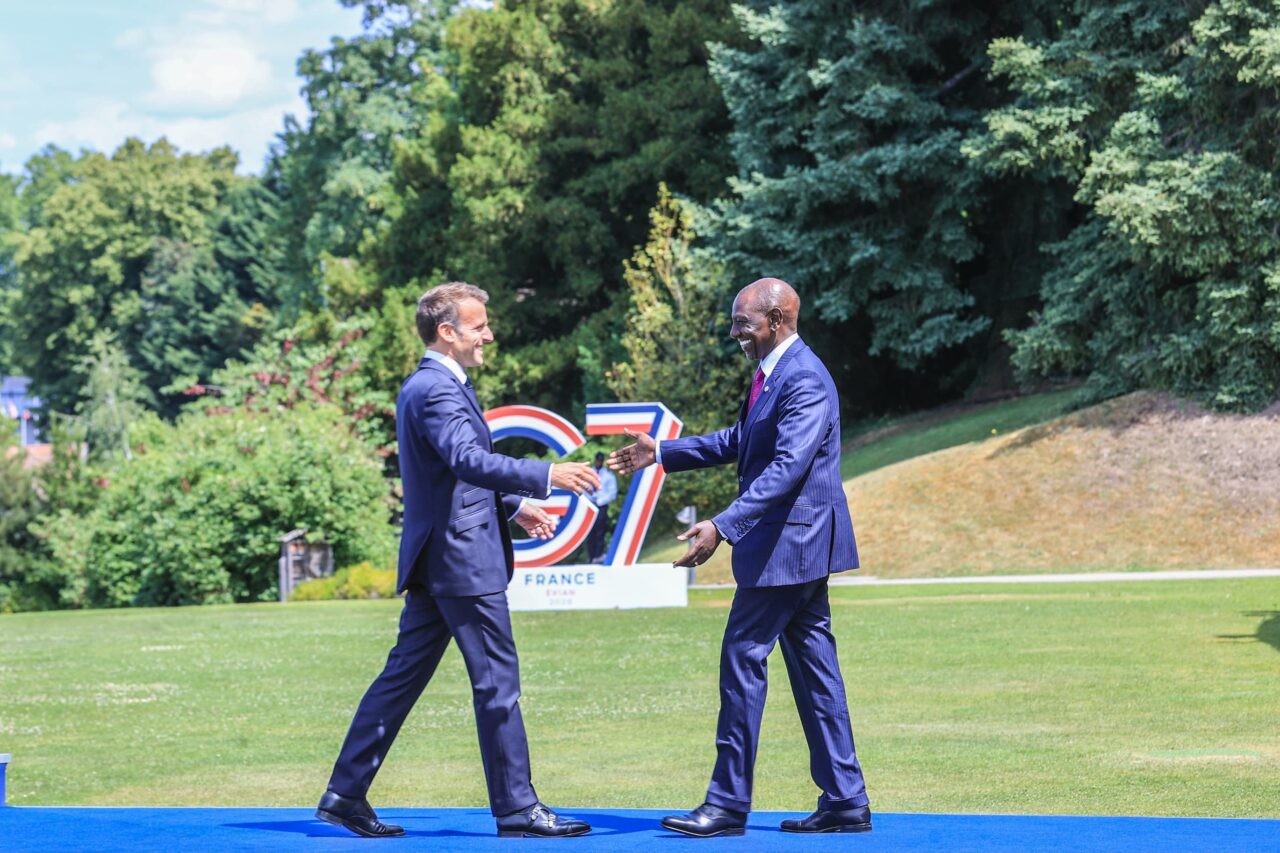
President William Ruto has called for the inclusion of Africa in the reform of global financial and governance institutions, saying the continent deserves equal treatment in shaping international systems.
Speaking during a media interview in Evian, France, on the sidelines of the G7 Summit on Tuesday, President Ruto said institutions established after the Second World War, including the United Nations Security Council, the International Monetary Fund (IMF), and the World Bank, must be democratised to reflect the interests of all nations.
“We are not asking for special treatment as Africa, but there must be equal treatment,” President Ruto said.
The President noted that Africa was not a passive observer in global affairs but an active participant in shaping emerging systems of cooperation and development.
He said the continent was not represented when many global institutions were created in 1945 and called for a new relationship between Africa and its international partners.
“As the African continent, we need a new paradigm shift with our partners. We need a new relationship and a new engagement,” he said.
President Ruto urged reforms that would make global institutions more fair, inclusive and accountable, warning that fragmented approaches to global challenges could increase instability.
He expressed confidence that discussions at the G7 Summit would support reforms at the United Nations Security Council to make it more representative and democratic.
“This meeting will be an opportunity for Africa to have a forthright and candid conversation with our partners,” he said, adding that the UN should be led by a reformer rather than an administrator.
The Head of State highlighted Africa’s potential contribution to global prosperity, citing the continent’s vast natural resources, minerals, agricultural land and renewable energy opportunities.
He said Africa’s growing population and workforce would make the continent a key driver of global economic growth, noting that by 2050, about 40 per cent of the world’s workforce would be African, while a quarter of the global population would live on the continent.
President Ruto outlined three key areas requiring urgent attention: access to concessional development financing, fairer borrowing terms, and improved global perceptions of Africa’s economic risks.
He criticised the high interest rates charged to African countries by international lenders compared to other economies, saying the situation must be addressed.
“We must also sort out the problem of global rating agencies exaggerating Africa’s risk yet the continent is not as risky as they want the world to believe,” he said.
The President also called for Africa’s involvement in global discussions on emerging technologies, including artificial intelligence, saying the continent must have a voice in determining how technology will drive future economies.