Thousands of intern teachers across the country are set to secure permanent employment after the government announced plans to absorb 24,000 of them into permanent and pensionable terms from July 2027.
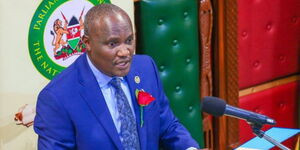
Treasury Cabinet Secretary John Mbadi made the announcement on Thursday while presenting the 2026/27 Budget Statement in Parliament, describing the move as part of the government’s continued investment in the education sector and efforts to address teacher shortages in public schools.
“Further, the newly recruited 24,000 intern teachers will be converted into permanent and pensionable in July 2027,” Mbadi told lawmakers.
The announcement is likely to be welcomed by thousands of young teachers who have been working under internship contracts, many of whom have been calling for job security and better employment terms.
The latest commitment comes on top of an earlier government plan to convert another 20,000 intern teachers to permanent and pensionable terms beginning January 2027. To support that transition, the Treasury has allocated Ksh4.9 billion.
According to Mbadi, the government allocated Ksh8.2 billion for maintaining the intern program of teachers within the 2026/2027 financial year as it continues to deploy teachers into schools countrywide.
The TSC has continued to be among the largest beneficiaries in the budget proposal as it is to receive Ksh424 billion allocation.
For many intern teachers, the planned conversion offers hope after years of serving in classrooms under temporary contracts that attract lower salaries and fewer benefits compared to permanent employment.
The teachers’ trade unionists, as well as other legislators, have often advocated for the absorption of the interning teachers into the full-time cadre, given that the teachers contribute to education even though in relatively harsher conditions.
A considerable percentage of the interns have since been posted to Junior Secondary Schools after the adoption of the Competency-Based Education (CBE).
Mbadi said the government had made notable progress in recruiting teachers over the last three years and would continue investing in the sector to improve the quality of education.
“By next year, this government will have employed 116,000 teachers. On average, that is more than 20,000 teachers per year. No previous government has ever employed more than 10,000 teachers per year,” he said.
The Treasury CS also defended the government’s education spending, dismissing claims that the sector was being underfunded.
According to Mbadi, education remains the largest recipient of government funding, with the sector set to receive Ksh784.5 billion in the 2026/27 financial year.
“In 2026/27, we are proposing Ksh784.5 billion, which is 26.4 per cent of the ministerial budget. Therefore, it is not correct that this government is defunding education. In fact, we are funding it more,” he said.
The planned absorption of the 24,000 intern teachers is expected to ease staffing pressures in schools while providing long-awaited job security for thousands of educators serving across the country.