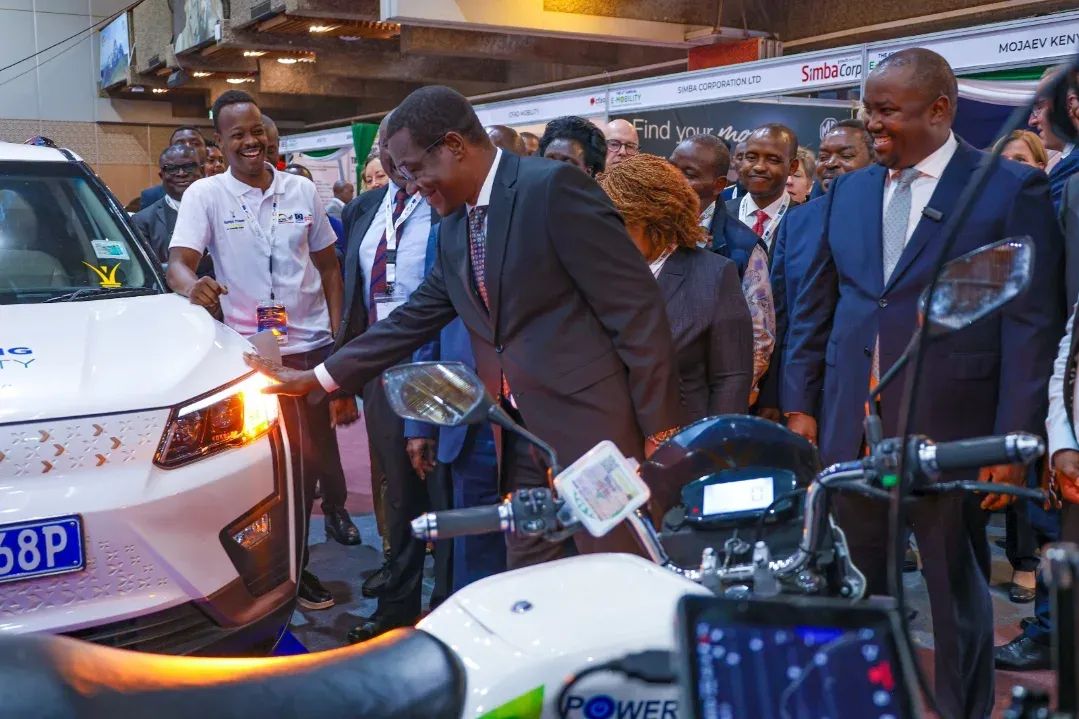
Kenya Power has announced nationwide pilot to transition all electricity using customers to charge electric vehicles (EVs) onto the special E-Mobility tariff to support the accelerating momentum of electric mobility in Kenya and plan for electricity demand in the future.
The utility added that the tariff offers a reduced cost of electricity at KSh16 per unit for peak, and KSh8 for off, peak hours making EV charging more affordable to consumers and businesses.
The project will enable Kenya Power to collect vital information about energy consumption in the emerging e, mobility industry.
Speaking on the development, Kenya Power Managing Director and Chief Executive Officer Kenya Power Dr. Eng. Joseph Siror said the company will continue to provide cleaner and cheaper transport across the country.
“Three years ago, Kenya Power successfully lobbied for a special electricity tariff to serve the e-mobility industry. Our commitment is to create awareness, support the market and drive the adoption of e-mobility in the country,” said Dr. Siror. said Dr.
Currently, 331 customers are metered under the E-Mobility tariff, a figure that has steadily increased since the Energy and Petroleum Regulatory Authority (EPRA) approved the tariff in 2023. Kenya Power expects the number of customers under the tariff to reach 1,000 by the end of the current financial year.
By 2030 KSh 5. 9B in revenue is expected to be generated from the sales of electricity to the e-mobility markets. 4 Revenue from EV charging sales was KSh 382M between July 2023 and April 2026.
4 Electric vehicles charging (EV)daily revenue has shown exponential growth amounting KSh873, 907 in July 2023 and hitting a record KSh35. 25 million in February 2026. Only Nairobi surpassed the entire country’s KSh271. 9 million in electricity revenue to all EVs other than the Coast KSh55 million North Eastern at KSh35 million
and West Kenya at KSh11.5 million.
Kenya power had also reported a 113% surge in electricity sales to the sector over the last 34 months, growing from 13,500 kilowatt-hours to 1.5 million kilowatt-hours.
Kenya had registered more than 35,000 electric vehicles by the end of 2025, reflecting growing adoption supported by favourable government policies and tax incentives.