Kenyans will get the new long-acting HIV prevention injection, Lenacapavir, at no cost, the Ministry of Health has clarified amid initial confusion over the pricing of the drug.
In a statement to clarify the initial reports on the drug’s pricing, the Ministry of Health stated thst Lenacapavir will be offered free of charge in health facilities in the select first-priority counties for prevention purposes.
This is amid initial reports indicating the drug will cost each patient an estimated Sh7,800 annually. The Ministry of Health stated the cost is an estimate of the cost to the health system and not the out-of-pocket cost to the patients.
The Division of the National AIDS and STI Control Programme (NASCOP) also stated that the long-acting HIV prevention injection will be free of charge to eligible Kenyans at the facilities within the select first-priority counties.
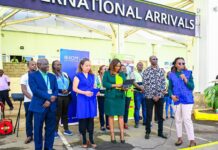
Recently, Kenya received 21,000 starter doses of the drug to kick off the national roll-out with the support of the Global Fund. In addition to this, an estimated 12,000 continuation doses are expected to arrive in the country come April, while another 25,000 doses from the United States Government will be helpful in the early stages of the program.
Unlike other HIV prevention medication taken every day, Lenacapavir is injected only twice a year. This could help people who find it hard to take medication every day.
Dr. Patrick Amoth, the Director General for Health at the Ministry of Health, who received the first shipment of the medicine, assured the people of Kenya that the drug is safe to use. The drug was approved by the U.S. FDA in June 2025 and then approved by the World Health Organization. The Pharmacy and Poisons Board in Kenya had also approved the drug in the oral and injectable form earlier this year.
The medicine is expected to be rolled out in March 2026 in 15 counties with a high prevalence of HIV and then gradually roll out to other parts of the country.
This is seen as an effort to align with the country’s vision of reducing the number of new HIV infections and moving closer to Universal Health Coverage targets. The country is working hard to ensure children are born HIV-free.