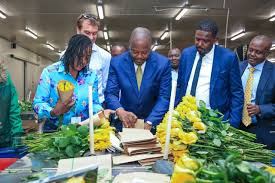
The government has introduced major reforms through the Finance Bill 2026 VAT refunds framework that is projected to release billions of shillings currently locked through delayed tax refunds and will bring much-needed dynamism into the agricultural exports of Kenya.
While addressing the crowd during the Flamingo Group Investments (FGI) expansion project launch in Naivasha, Cabinet Secretary for Agriculture and Livestock Development Mutahi Kagwe said that improvements in refunds in Finance Bill 2026 are targeting stability in exporter companies and cash flow in relation to value chains in agriculture.
“We are setting right the exporter ecosystem once and for all. The Finance Bill 2026 will ensure that agricultural produce exporters are indeed competitive, have liquidity, and are able to reinvest back into Kenya,” Kagwe stated.
Finance Bill 2026 VAT Refunds to Ease Exporter Cash Crunch
With the proposed changes, the Finance Bill 2026 VAT refunds scheme would reduce the rate of input VAT paid by exporters from 16 percent to 8 percent, exempt excise duty on export promotion duties levied on packing materials such as kraft paper, as well as allow 100 percent exporters with long standing exporter status to operate on Export Processing Zone/SEZ regimes.
The impact of these measures means that the VAT applied to the purchases the exporters make locally will be exempted, hence reducing costs of doing business for the exporters. The measures also include the speedy crediting of VAT overpayment against the exporters’ tax liability in the Finance Bill 2026 VAT refunds.
Other measures in the Finance Bill 2026 VAT refund proposal include streamlining regulatory charges and increased air freight capacity through Kenya Airways and additional airlines, such as Turkish Airlines, to make it easier to ship perishable goods.
Official reports indicated that through Finance Bill 2026 VAT refunds reforms, billions of shillings that were stuck in refund backlogs will be released to enable farmers to reinvest in horticulture production, tea production, coffee production, livestock production, and fresh produce.
Kagwe mentioned an example of a company called Flamingo Group Investments that owed an outstanding VAT refund of KSh 1.8 billion, where KSh 470 million has since been paid out. These he showed were not losses but working capitals used in achieving growth.
“These finances go back to farms, to technology, to job creation,” he said, observing that the Finance Bill 2026 VAT refunds system would ensure there would never be such a backlog in future.
These measures were unveiled alongside Flamingo’s expansion project worth KSh 2 billion, which involves an annual investment of KSh 644 million for a period of three years. The project is expected to create 500 jobs directly in addition to increasing value-added bouquets for export to Europe and the United Kingdom.
Flamingo Horticulture Kenya is currently employing over 12,000 employees directly and sustain the livelihood of 6,000 others in the supply chain, exporting over 750 million stems of flowers every year. It is estimated that every day, the country of Kenya exports 60 million roses, which makes horticulture the leading foreign currency earner of the nation.
The Principal Secretary for Investment Promotion, Abubakar Hassan Abubakar, described the reforms under the Finance Bill 2026 VAT refunds as a clear mark of renewed commitment to the restoration of investor confidence and the role of exports as engines of economic activity.
According to the government, the Finance Bill 2026 VAT Refunds campaign is in line with the Bottom-Up Economic Transformation Agenda, which seeks to position agriculture as a sector for export-led growth and jobs.