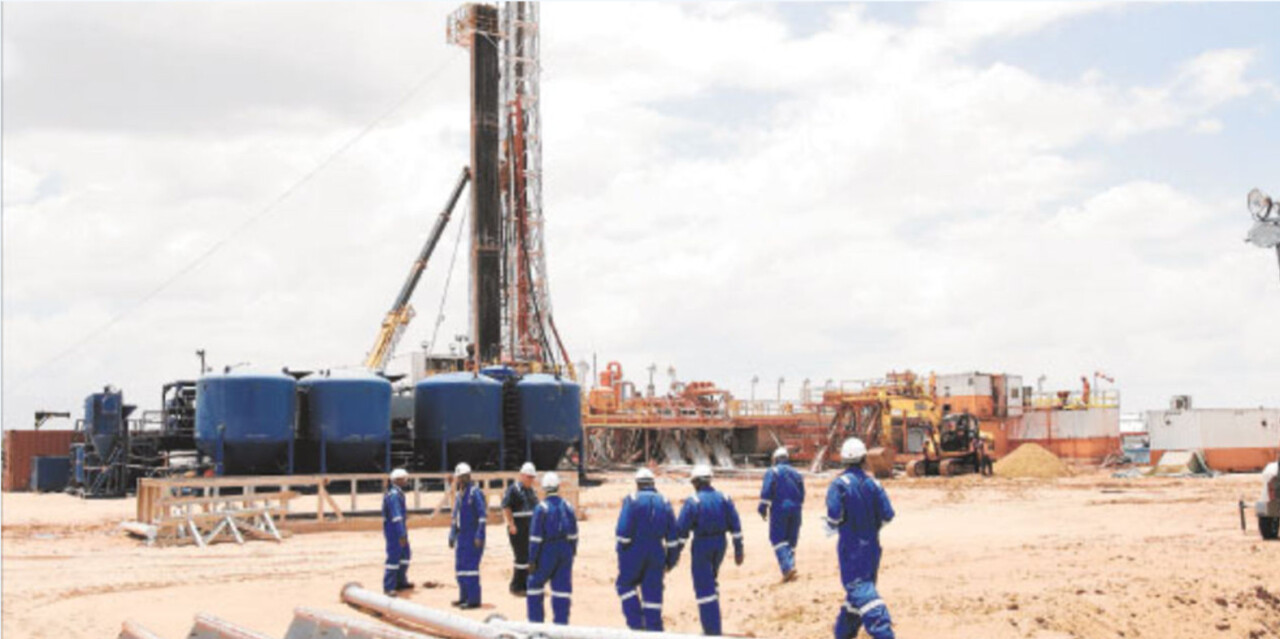
Kenya has revived its long-stalled ambition to produce oil commercially after the government approved the South Lokichar Basin Field Development Plan (FDP), paving the way for Parliament to ratify the project.
Energy Cabinet Secretary Opiyo Wandayi said the approval represents “a historic point” in Kenya’s push toward a modern, competitive economy.
“Today, I signed the instruments required for submission of the approved FDP to Parliament for ratification,” he said in Nairobi.
This is the first time any FDP has reached this stage, marking Kenya’s transition from exploration to full-scale development after more than a decade of delays that saw multiple partners walk away.
The project stumbled for years over regulatory uncertainty, leading Tullow Oil PLC in April to sell its entire Kenyan portfolio to Gulf Energy Ltd for at least $120 million. Gulf Energy E&P BV (GE), now the sole developer, submitted the FDP to the Energy and Petroleum Regulatory Authority.
The plan covers six oil discoveries in Blocks T6 and T7 and proposes a phased development approach beginning with the largest, most technically ready reservoirs.
The total investment required is estimated at $6.1 billion (Sh793 billion), with expected recovery of 326 million barrels over 25 years.
Phase 1 aims to produce 20,000 barrels of oil per day, rising to 50,000 barrels per day under Phase 2. GE is targeting First Oil by December 2026 and full production by 2032.
Wandayi said the development is expected to generate nationwide and local benefits through jobs, procurement opportunities, and expanded economic activity. In Turkana and West Pokot, the project is projected to boost infrastructure, attract investment, and enhance revenue-sharing benefits for communities.
The ministry said the project will help diversify Kenya’s economy, improve the balance of payments, and strengthen the country’s appeal to global investors. It is also expected to build new local capacity in petroleum engineering, logistics and operations.
“This is the most significant private-sector-driven upstream petroleum investment in recent times,” Wandayi said, adding that the government has confidence in GE’s ability to deliver First Oil on time.
As work progresses, the contractor is required to prioritise local content, including employment, procurement and skills development. The ministry also plans to open additional exploration blocks through licensing rounds and direct negotiations.
Wandayi said Kenya remains committed to transparency, competitiveness and sustainability as it seeks to unlock further petroleum potential.