Kenya Wildlife Service (KWS) rangers are searching for three suspected poachers who escaped an ambush in Tana River County after abandoning a motorbike loaded with wildlife meat.
The suspects fled towards Komorjila village in Tana North Sub-County after rangers arrived at the scene during an operation targeting illegal poaching and the trade in bush meat.
Tana River County Warden Bakari George said the operation was launched at around 8am on Tuesday, October 6, following a tip-off from informants about suspected poaching activities in the area.
“Today, around 8am, we got intelligence from our informants that there was illegal poaching in some area. We dispatched a team to lay an ambush so that we could find the suspects killing our wildlife,” Bakari said.
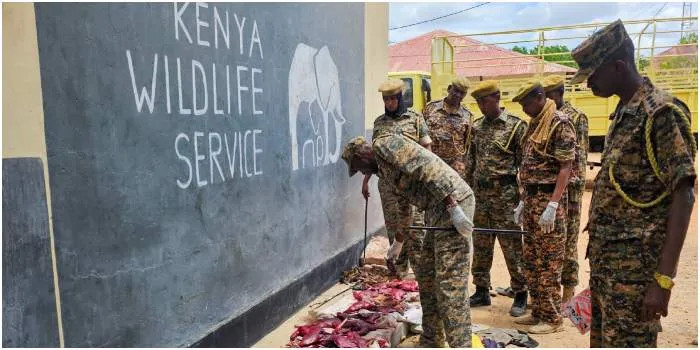
When the officers arrived at the suspected poaching site, they found the motorbike carrying the wildlife meat. However, the three suspects managed to escape before they could be arrested.
KWS recovers wildlife meat
The operation resulted in the recovery of 21 dik-dik carcasses, 20 dik-dik heads and 12 impala carcasses.
Rangers also recovered meat from three guinea fowl, according to KWS.
Two machetes and two slashers believed to have been used by the suspects were also recovered alongside the abandoned motorbike.
KWS said its officers are continuing with the search for the three suspects.
Bakari said the service had been monitoring the area for some time because of persistent cases of illegal wildlife hunting and consumption of bush meat in Tana River.
The county is home to several wildlife and conservation areas, including Kora National Park, Arawale National Reserve, Tana River Primate National Reserve, Ishaqbini Hirola Conservancy, Ndera Community Conservancy and the Tana River Delta Ramsar Site.
KWS steps up anti-poaching operations
The latest incident comes months after three people were arrested in Kiambu County in April during a joint police and KWS operation targeting the illegal wildlife meat trade.
More than one tonne of suspected zebra meat was recovered during the operation, alongside a skinned carcass, processed meat, equipment and a vehicle.
KWS has in recent years stepped up efforts to combat poaching through increased ranger patrols, drone surveillance, aerial monitoring and modern tracking and communication systems.
The measures are aimed at detecting illegal activities and protecting wildlife in national parks, reserves and other conservation areas across the country.