
The State Department for Trade has reaffirmed its commitment to advancing regional collaboration in horticulture, following active participation in the concluded session of the two-day Public-Private Dialogue convened by the Horticulture Council of Eastern Africa (HoCEA), Nairobi.
The session, themed “Key Areas for Discussion-Constraints and Joint Action,” brought together public and private sector stakeholders to deliberate on challenges affecting horticultural trade and identify practical opportunities for stronger collaboration across the region.
Deputy Director for Domestic Trade, Mathew Komen, outlined several priority areas requiring sustained joint action to enhance the competitiveness and efficiency of horticultural trade in Eastern Africa.
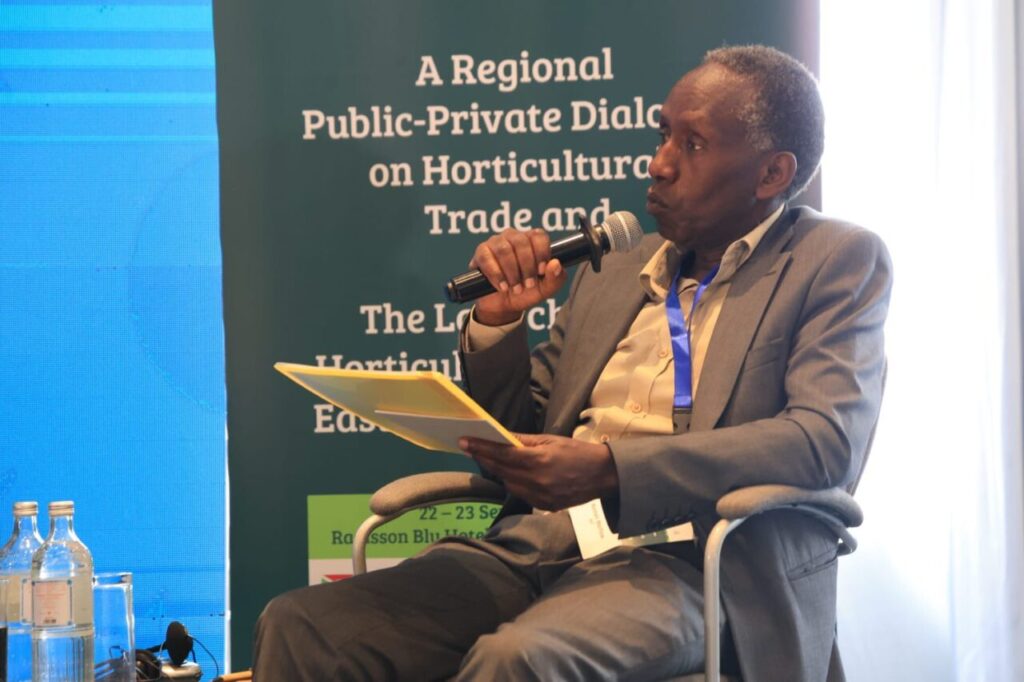
He addressed Non-Tariff Barriers (NTBs) that hinder cross-border trade, which will strengthen trade facilitation and border efficiency to reduce delays and costs. He discussed the enhancement of standards, quality and conformity assessment that will meet international market requirements.
He highlighted the need to advance digital trade and paperless commerce, strengthen regional value chains and investments, improve access to finance and foster a more predictable business environment for horticultural enterprises.

The meeting was also attended by Trade Development Officer, Alice Keittany, who noted the East African Community has established a legal and institutional framework to support the elimination of NTBs.
She referenced Article 13 of the EAC Customs Union Protocol, which provides for the removal of existing NTBs and the prevention of new ones among Partner States.
Keittany further underscored the importance of trade facilitation in making legitimate trade simpler, faster, more predictable and less costly. She emphasized the efficiency of border processes and coordinated regulatory systems to reduce the cost of doing business and improve market access for horticultural products.
The discussions highlighted the importance of continued engagement among Partner States, industry players and other stakeholders.
The dialogue aims to support seamless regional trade, strengthen horticultural value chains, contribute to the sustainable growth of Eastern Africa’s horticultural sector.