The government has announced plans to expand irrigation across 1.5 million acres of farmland as President William Ruto steps up efforts to increase local food production and reduce Kenya’s dependence on imports.
Chief of Staff and Head of Public Service Felix Koskei said the government was investing in water storage, irrigation infrastructure and supporting facilities to turn arid and semi-arid lands (ASALs) into major food production zones.
Speaking on Tuesday, November 3, during a government development tour of the Galana-Kulalu Food Security Project, Koskei said Kenya could no longer rely entirely on rain-fed agriculture to feed its growing population.
He noted that unpredictable weather patterns and prolonged droughts had made it necessary for the country to invest in alternative ways of producing food.
“Kenya can no longer rely solely on rain-fed agriculture, particularly in the face of unpredictable weather patterns and prolonged droughts,” Koskei said.
He added that the transformation of Galana-Kulalu would require sustained investment in roads, electricity, water and agro-processing facilities to attract private investors and support large-scale farming.
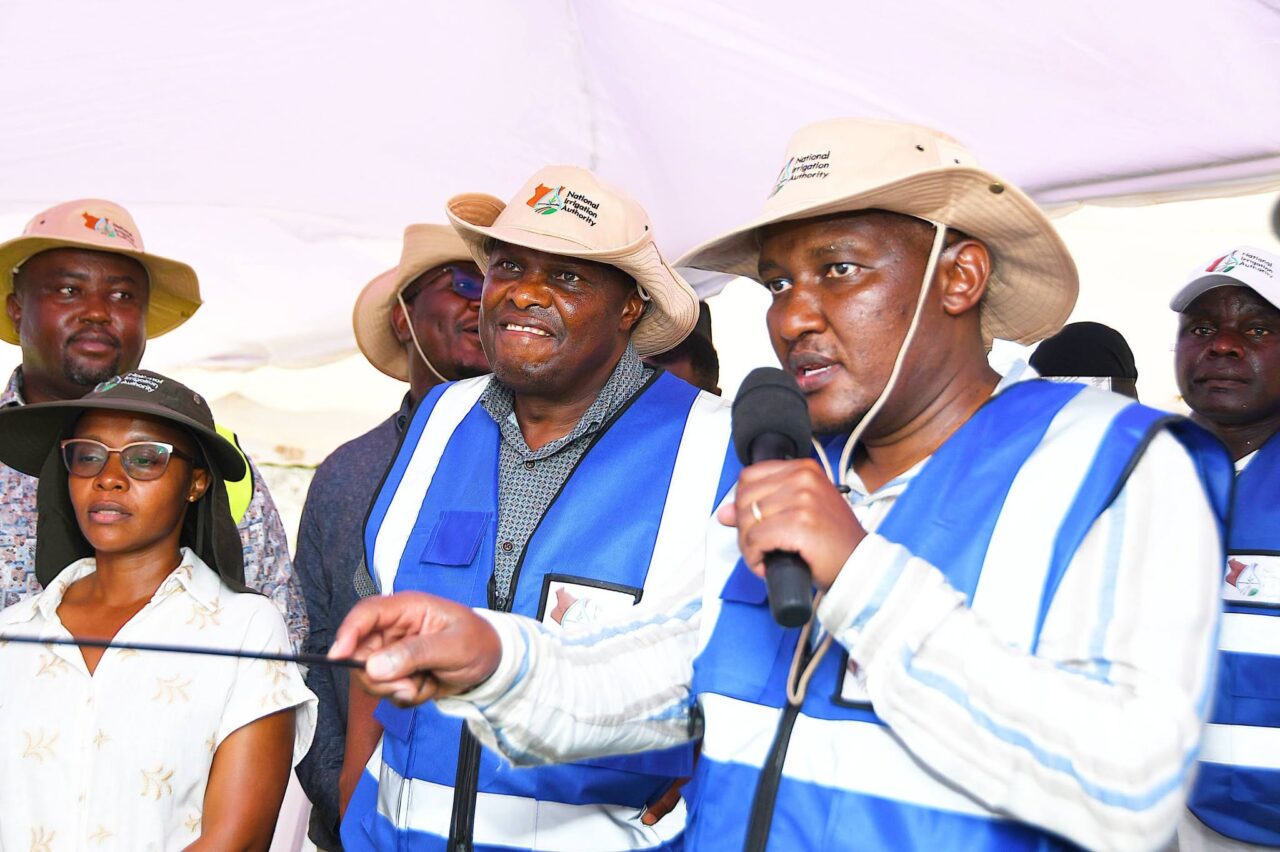
The delegation included 32 Principal Secretaries and other senior government officials who assessed the progress of the food security project.
Principal Secretary for Irrigation Ephantus Kimotho said the government was implementing an ambitious programme targeting 1.5 million acres, with an initial phase of 500,000 acres expected to unlock agricultural potential across the country.
“At Galana-Kulalu, the Government has invested approximately KSh520 million in water infrastructure, initially enabling irrigation of 10,000 acres,” Kimotho said.
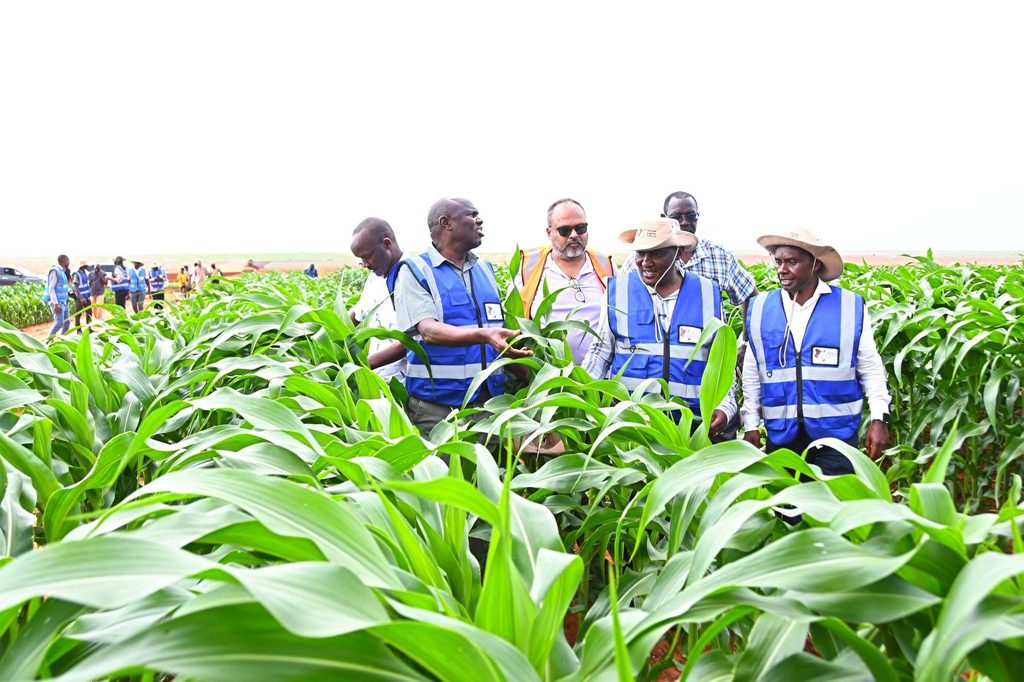
He disclosed that private investors were already cultivating approximately 6,000 acres under commercial maize, seed maize and soya beans, with the remaining 4,000 acres expected to be brought under production in the next planting season.
The government is also relying on private sector partnerships to expand commercial farming. Selu Limited is currently cultivating 2,000 acres of seed maize and plans to increase the acreage to 20,000 over the next three years.
Pwani Farms has also established 2,000 acres of soya beans and another 2,000 acres of maize. The company has invested in a maize milling plant and solar-powered irrigation systems to support production.
The expansion of soya farming is expected to support local production of edible oils and animal feeds, reducing the need for imports while lowering production costs in the livestock and dairy sectors.
Another major investment is the proposed Galana-Athi Dam, which is expected to provide water for large-scale irrigation and unlock more agricultural land in the region.
The government is also pursuing other water storage projects, including Thwake Dam, as part of a wider programme targeting the construction of close to 200 dams.
Beyond increasing food production, the projects are expected to create employment opportunities for young people in farming, irrigation engineering, agronomy and agricultural processing.
The government estimates that Kenya spends approximately KSh560 billion annually on food imports. Increasing domestic production of maize, rice, wheat, sugar and edible oils is therefore expected to help reduce the import bill.
Koskei said improved infrastructure and private sector investment would position ASAL regions as important contributors to national food production instead of areas that depend on food supplies from other parts of the country.
The government hopes the irrigation programme will strengthen household food security, improve rural incomes and eventually enable Kenya to produce enough food for local consumption while exporting surplus produce.