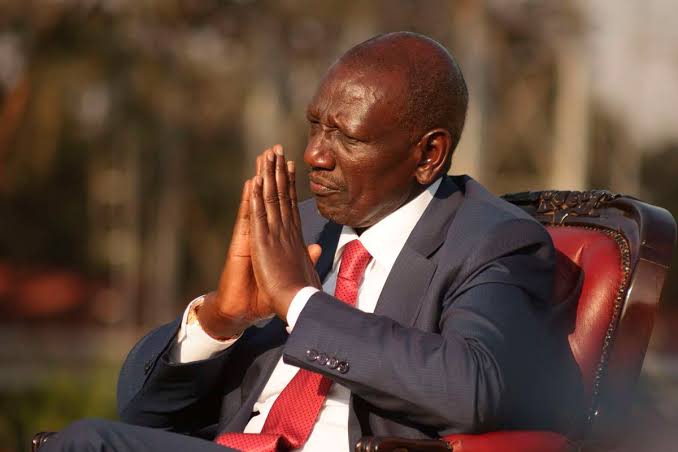
President William Ruto has said Kenya remains open to foreigners, but warned those living and doing business in the country to follow the law.
Ruto said on Saturday that all foreigners, including those from the East African Community (EAC) and the Common Market for Eastern and Southern Africa (COMESA), were welcome in Kenya as long as they complied with the country’s laws.
“Kenya is very open for business. I know there has been a lot of debate about who should work in Kenya or should invest in Kenya. Let me say this for the record. All investors have a space in Kenya,” Ruto said.
Speaking in Bomet, the President said foreigners working, investing or running businesses in Kenya must obtain the necessary documents and comply with regulations governing employment, immigration and business operations.
“Every person from wherever they come from will be treated fairly in accordance with the law and made to comply with the regulations governing employment in Kenya, investment in Kenya or visit Kenya,” he said.
Ruto also warned Kenyans against attacking or harassing foreigners, saying no one had the right to take the law into their own hands.
“No citizen has a right to take the law into their hands and harm other people from other areas. We will continue to be an open society because that is the DNA of Kenya,” he said.
His remarks come days after the government gave foreign nationals running small-scale businesses 90 days to regularise their stay and business operations.
Those affected are required to obtain the necessary immigration documents and work permits, register their businesses and secure the relevant local licences within the grace period.
The directive caused anxiety among some foreign traders, with some fearing that they could lose their businesses if they failed to meet the requirements.
The announcement was also followed by long queues at some foreign embassies and missions in Nairobi as traders sought help with documentation.
Ruto’s latest remarks come amid reports of harassment and attacks against some foreign traders, particularly Burundian nationals.
Some traders have reportedly lost businesses and sources of income, while others have faced threats and eviction from their homes and business premises.
The government has maintained that the 90-day period is meant to give foreign traders time to regularise their status, rather than force them out of the country.