President William Ruto has outlined 10 measures his administration is pursuing to improve food security, increase agricultural production and tackle malnutrition in Kenya.
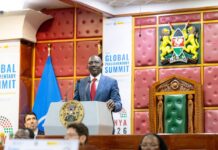
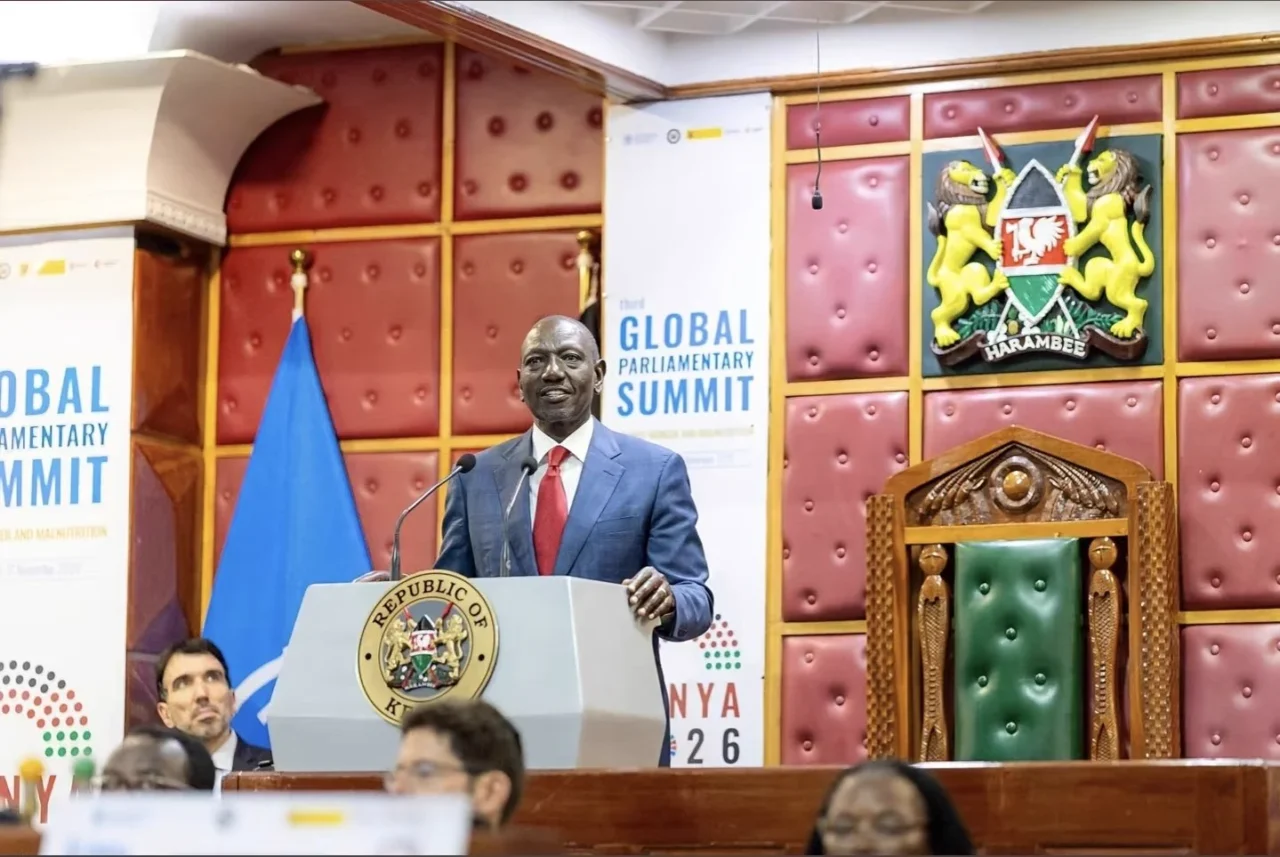
Speaking during the Third Global Parliamentary Summit Against Hunger and Malnutrition at Parliament Buildings in Nairobi on Monday, November 16, Ruto highlighted his government’s achievements since 2022 and announced plans to expand investment in agriculture.
One of the major proposals is the construction of at least 50 mega dams, 200 medium and small dams, and thousands of micro dams across the country.
Ruto said the projects would help bring an additional 2.5 million acres under irrigation within the next five to seven years, reducing Kenya’s dependence on rainfall.
“We can no longer allow the clouds to determine whether our people eat,” he said.
The President said the government would use the National Infrastructure Fund to mobilise domestic and international capital to finance the projects without putting additional pressure on public debt.
He also highlighted the subsidised fertiliser programme, saying the government had distributed more than 38 million bags to nearly two million farmers since 2022.
According to Ruto, the price of a 50kg bag of fertiliser had dropped from KSh7,500 to KSh2,000, helping increase agricultural production.
He said maize production had risen from 34.3 million bags in 2022 to 71 million bags in 2025, while imports declined substantially.
On education and nutrition, Ruto announced plans to expand the school feeding programme from the current three million learners to 10 million by 2030.
The programme is expected to cover all 47 counties from 2027, with the government also seeking to create a reliable market for smallholder farmers through the purchase of locally produced food.
“Every meal is three policies on one plate: nutrition for the child, school attendance and a reliable market for the smallholder farmer,” he said.
The Head of State further called for increased investment in agricultural storage, processing, transport and energy to reduce post-harvest losses, create employment and boost exports.
He said the government also wanted to improve farmers’ access to affordable credit, agricultural inputs and markets to lower production costs and increase household incomes.
Despite the progress highlighted, Ruto acknowledged that Kenya was yet to achieve food security.
He revealed that 2.7 million Kenyans were facing crisis levels of food insecurity, with hundreds of thousands of children and pregnant and breastfeeding women requiring nutritional support.
The President added that malnutrition was estimated to cost the Kenyan economy 6.9 per cent of its Gross Domestic Product (GDP).
Ruto urged Members of Parliament to strengthen oversight of government-funded agricultural projects to ensure public resources deliver tangible results.
“I would rather be questioned by a committee today than discover next season that the fertiliser never arrived,” he told the delegates.
He challenged lawmakers to ensure that money allocated to dams, irrigation schemes and school feeding programmes translates into improved food production and better nutrition.
Ruto said his administration’s broader ambition was to transform Kenya into a food-secure country and eventually a net exporter of agricultural products.