The government has unveiled a series of structured guidelines aimed at enabling refugees in Kenya to gain formal financial inclusion, a key pillar of the Shirika Plan, which seeks to integrate refugees into host communities and reduce their reliance on humanitarian aid.
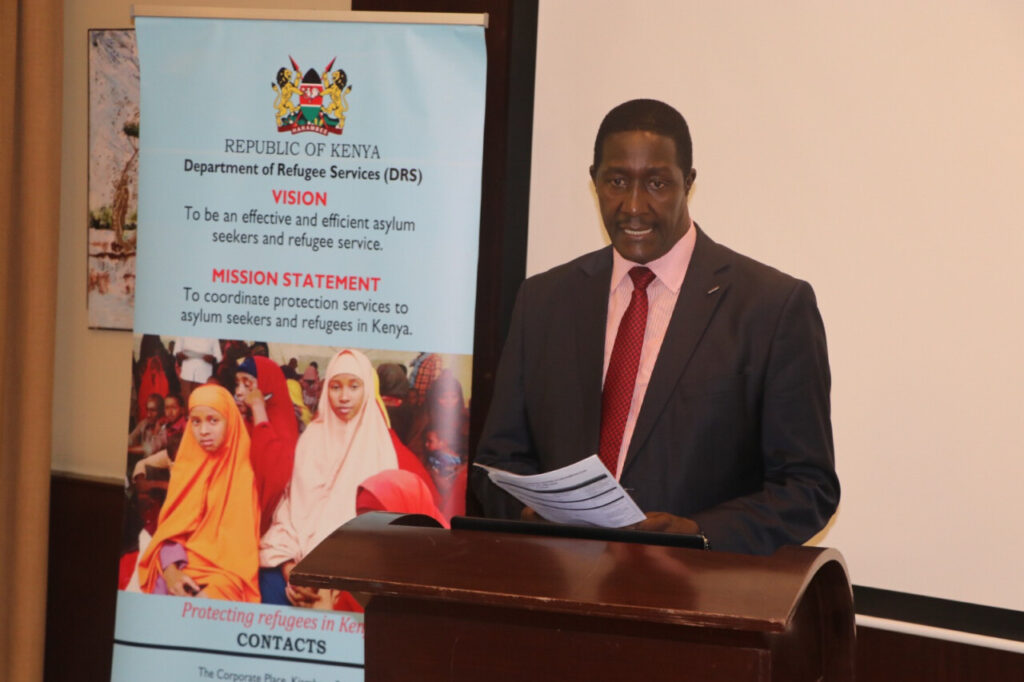
Speaking during a webinar hosted by the East African Centre for Forced Migration and Displacement, Commissioner for Refugee Affairs John Burugu said the state was finalizing policies to ensure that refugees can safely access mobile and banking services under new regulations gazetted through the Kenya Information and Communications Act.
“These regulations now recognise the Refugee ID as a valid document for accessing mobile services like SIM card registration,” Burugu stated, adding that the process will be carefully managed to avoid misuse and ensure data protection.
Previously, refugees could not directly own SIM cards or mobile money accounts and often operated through Kenyan proxies. However, Burugu said this workaround will now be illegal and must be phased out by November this year, six months after the gazettement.
“The government feels it is not prudent to have every SIM card vendor issuing them to refugees; therefore, there is a structured process and set of guidelines that we are awaiting from the Cabinet Secretary,” he added.
The policy shift comes as Kenya transitions from an aid-based refugee model to an integration-focused approach that promotes self-reliance, job access, and business development—central tenets of the Shirika Plan.
Burugu highlighted that refugees possess untapped talents and skills that could benefit both themselves and the host economy. The new measures aim to unlock this potential by removing legal and logistical barriers.
“This is about recognising the potential that refugees bring into the country. The revised legal framework will allow them to register for mobile services, and in time, gain access to formal banking channels,” said Burugu.
The amended law also addresses special circumstances in refugee communities, such as child-headed households, by allowing guardians to manage SIM ownership on their behalf.
Already, institutions like Equity Bank have 152 banking agents in Kakuma, but the government expects more participation from telecom companies through agent appointments that will also benefit the host communities.