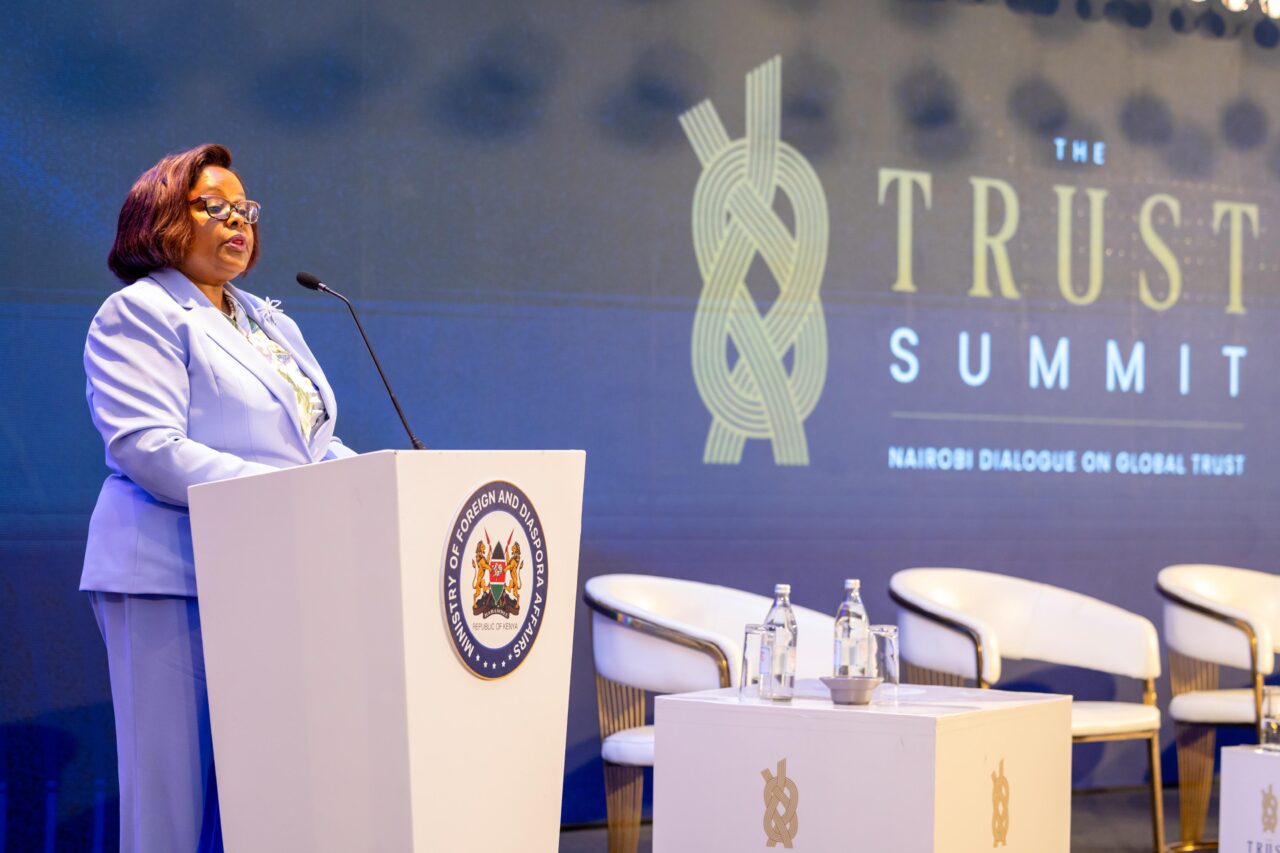
Secretary to the Cabinet Mercy Wanjau represented Deputy President Kithure Kindiki at the Nairobi Trust Summit, where delegates adopted a 29-point plan proposing reforms to public institutions and global governance.
The Nairobi Call to Action on Global Trust was adopted on Friday, October 23, at the end of a three-day meeting that brought together government representatives, international organisations, business leaders, civil society groups and other stakeholders.
The agreement proposes a Global Trust Facility under the United Nations to finance initiatives aimed at strengthening public institutions, as well as a Nairobi Trust Council to be hosted by Kenya.
Foreign Affairs Principal Secretary Korir Sing’Oei said the next phase would focus on turning the proposals into practical measures that benefit citizens.
“Trust is a public good that must be deliberately nurtured, financed and strengthened. The true measure of this Summit will be the commitments we translate into tangible outcomes for our citizens,” Sing’Oei said.
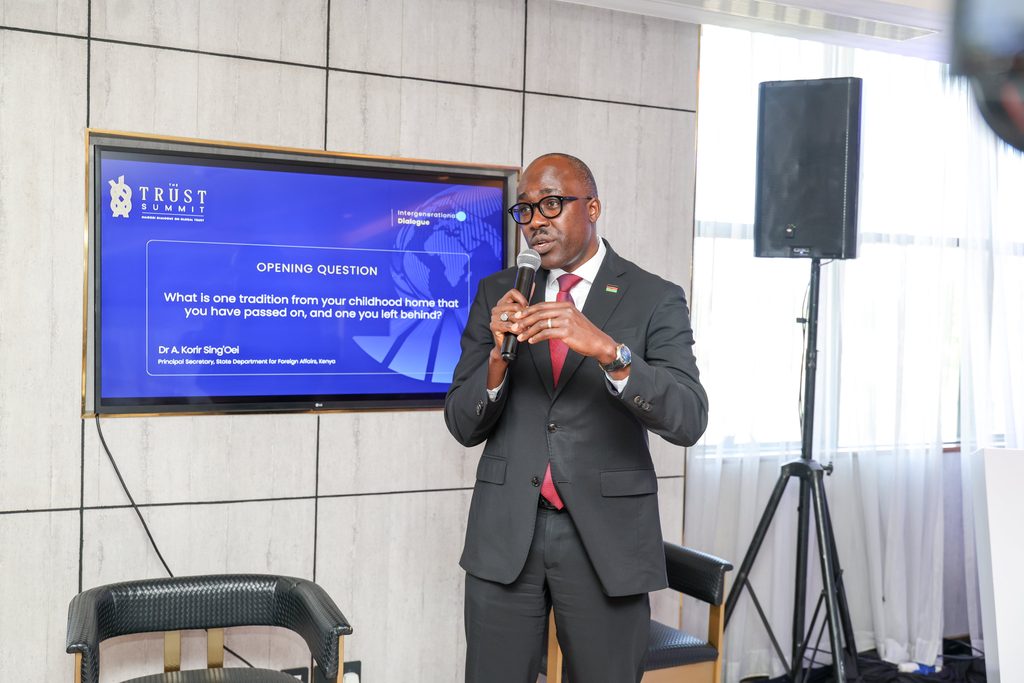
He said the government planned to extend public engagement campaigns to counties, enabling regulators and public institutions to explain their decisions and demonstrate accountability.
The plan identifies four priority areas: restoring trust in public institutions, reforming multilateral organisations, strengthening digital governance and promoting inclusion.
It proposes an annual Regulatory Trust Index to measure public confidence in regulatory institutions at national, regional and global levels. It also calls for stronger cooperation among regulators within the East African Community and the African Continental Free Trade Area to reduce unnecessary compliance costs.
On global governance, the agreement calls for reforms to international institutions and the global financial system to make them more representative, transparent and accountable. It also proposes stronger global health cooperation, equitable access to medical supplies and predictable financing for climate action.
The framework further urges greater transparency in the operations of digital platforms, including their use of algorithms and artificial intelligence-generated content. It calls for stronger protection of independent journalism and scientific integrity, alongside greater African participation in global digital governance.
The proposed Global Trust Facility would operate as a voluntary financing mechanism supported by governments and other contributors over an initial four-year period. The United Nations Development Programme has been proposed as its administrator, subject to further development and implementation. The agreement does not confirm that the facility has secured funding or received final UN approval.
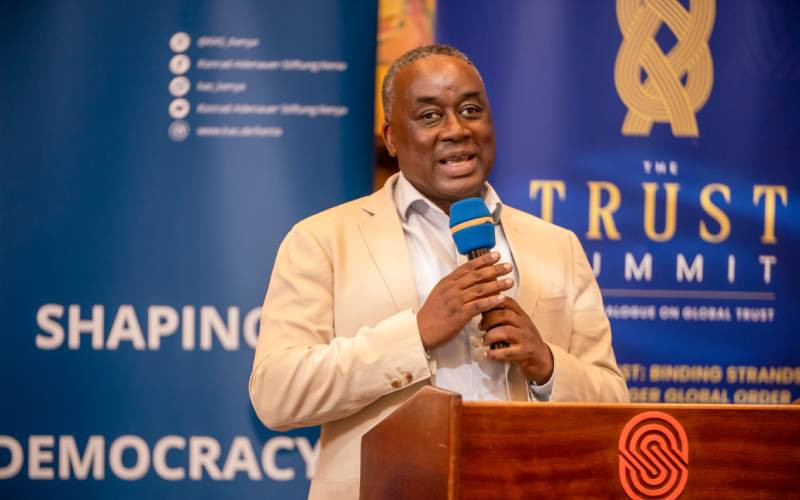
Trust Summit Chief Executive Officer Awel Uwihanganye said the agreement was intended to move the global discussion from identifying the trust deficit to taking action.
“The Nairobi Call to Action moves the world from diagnosing the trust deficit to doing something about it. Trust is a global public good, and no institution, sector or country can rebuild it alone,” Uwihanganye said.
The plan also calls for greater participation by young people, women, persons with disabilities, displaced persons and other excluded communities in decisions affecting their lives.
The Summit Secretariat is expected to develop an implementation framework with monitoring and reporting mechanisms, including reviews every two years. The Summit is also expected to convene every two years.
The meeting was held in Nairobi from October 21 to 23, 2026, under the theme “Weaving Trust: Binding Strands for a Stronger Global Order.”