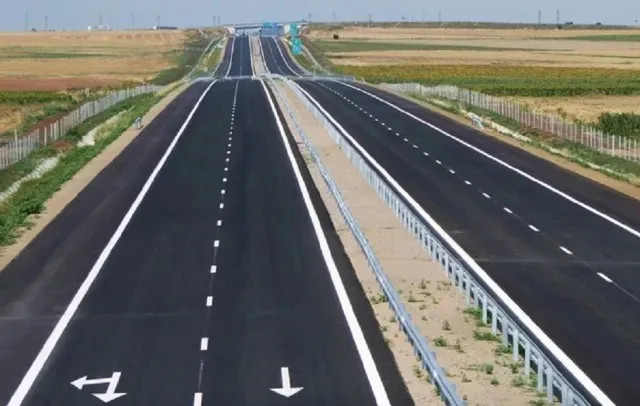
The government has taken the first formal step towards bringing a private investor into the Nairobi-Mombasa Road project, with the Kenya National Highways Authority (KeNHA) now looking for a consultant to assess how the partnership can be structured.
In a procurement notice published on Tuesday, August 11, KeNHA invited firms to provide feasibility studies and transaction advisory services for the proposed public-private partnership (PPP).
The consultant will first establish whether the proposed arrangement is viable before the government moves to select a private partner for the project.
KeNHA has given the assignment 15 months, with six months set aside for feasibility studies and another nine months for transaction advisory services.
The process will cover the existing 461-kilometre A8 highway, which the government plans to expand into a minimum four-lane dual carriageway.
The consultant will assess the condition and infrastructure needs of the road, as well as how traffic is expected to grow along the busy corridor.
Other areas to be examined include traffic engineering, transport demand forecasting and the use of Intelligent Transport Systems.
Environmental and social safeguards will also form part of the assessment, alongside highway planning and engineering design.
KeNHA is further seeking a firm with experience in PPP projects, particularly in project structuring, financial analysis, procurement support and managing the process of selecting private investors.
Interested firms have until August 27, 2026, to submit their bids.
The move comes shortly after the government abandoned the proposed Ksh468 billion Nairobi-Mombasa “Usahihi” Expressway project that had been linked to US-based Everstrong Capital.
The project was terminated after failing to meet mandatory financial, legal and risk-transfer requirements, according to the PPP Committee.
The latest process is therefore a fresh attempt to explore private-sector financing for the Nairobi-Mombasa corridor, one of Kenya’s busiest and most important transport routes.
For now, KeNHA is not selecting the private operator itself. The first stage is to establish the feasibility of the PPP and determine the most suitable structure before the government proceeds to the next stage.