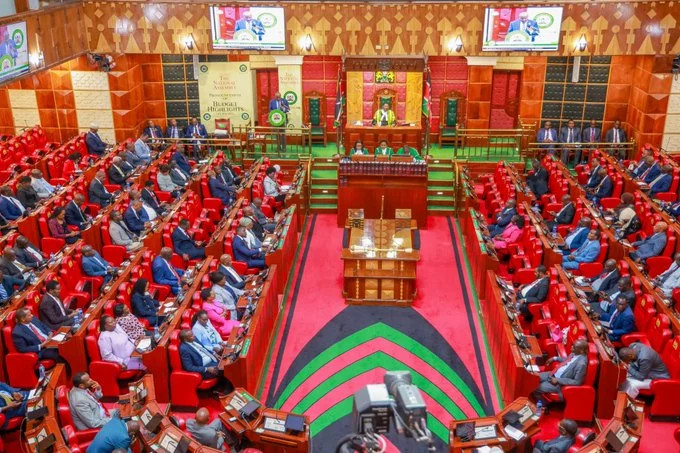
Members of Parliament have warned accounting officers in Technical and Vocational Colleges (TVCs) against spending public money without approved budgets, saying they could be held personally liable for such expenditure.
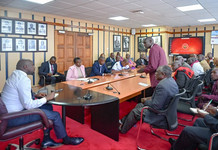
The warning was issued by the National Assembly Public Investments Committee on Governance and Education as MPs reviewed Auditor-General reports covering the 2018/19 to 2024/25 financial years.
The committee was examining the financial records of Emining Technical Training Institute, Kipkabus TVC, Emgwen TVC and Samburu TVC.
Luanda MP Dick Maungu cautioned the management of Emgwen TVC after auditors found that the institution had incurred expenditure without an approved budget during the period under review.
Maungu said public institutions must ensure that every expenditure is supported by a properly prepared and approved budget.
According to a statement issued after the committee’s meeting on Wednesday, August 19, the MP warned that spending without an approved budget amounted to ineligible expenditure and could expose accounting officers to liability.
The Auditor-General’s representative, however, told the committee that auditors had not established evidence showing that the money had been misappropriated or used outside the college’s operations.
The problem was that auditors could not properly assess the expenditure because Emgwen TVC did not have an itemised budget that could be used to compare the spending.
This made it difficult for the auditors to establish whether the money had been spent for the purposes approved by the institution.
Maungu told the college management that the size of an institution could not be used as a reason to overlook financial controls.
MPs question procurement records
The committee also raised concerns over procurement practices at Emgwen TVC.
MPs faulted the college for failing to publish procurement contracts on its notice board and website during the period being audited.
College officials told the committee that the documents had since been uploaded, but MPs demanded evidence to confirm the claim.
The committee also wanted the institution to provide records showing that it had reserved at least 30 per cent of procurement opportunities for youth, women and persons with disabilities.
MPs rejected general claims of compliance and instead demanded documentary evidence.
The requirement is part of government efforts to ensure that groups targeted under the Access to Government Procurement Opportunities programme get a share of public procurement opportunities.
Samburu TVC questioned over unspent funds
The committee also turned its attention to Samburu TVC, where MPs questioned the institution’s budgetary controls.
The college reported revenue of Ksh111.48 million against expenditure of Ksh84.12 million for the year ending June 2025.
This left about Ksh27.36 million unspent.
MPs questioned why the funds had not been utilised, with the college management citing financial constraints as one of the reasons it had not established an operational internal audit function.
The committee maintained that financial difficulties could not be used to justify failure to comply with public finance and procurement requirements.
MPs said TVCs, like other public institutions, are required to have proper systems for budgeting, procurement and internal controls to ensure public money is properly managed.
The scrutiny comes as Parliament continues to examine how public institutions account for funds allocated to them.
For the college managers under review, the message from the committee was clear: having public money is not enough; institutions must also be able to show how and why every shilling was spent.