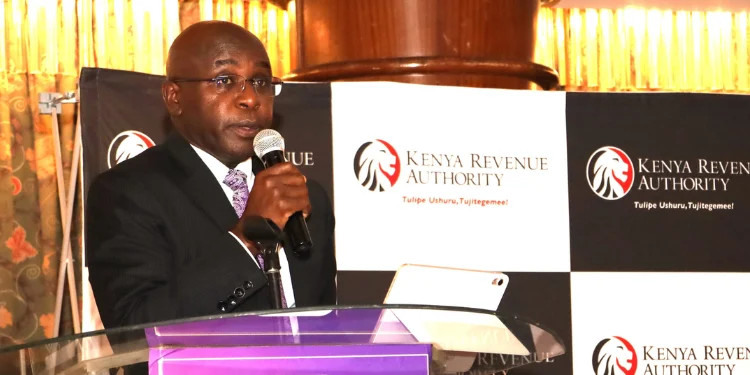
The Kenya Revenue Authority has warned businesses against filing nil returns, saying the practice could land them in trouble as the tax filing deadline draws closer.
In a message shared on Monday, KRA said some business owners continue to declare zero income even when their businesses are active, something the authority says is not allowed.
“A message to habitual NIL filers: if you are earning from your business, you cannot declare nil returns,” KRA said.
The authority made it clear that filing nil returns is not a way to grow a business, but simply a requirement meant for companies that are not operating.
According to KRA, declaring zero income while a business is running raises red flags and could lead to audits. The tax body said its systems are able to pick up such inconsistencies, especially where there are signs of transactions.
KRA has now urged business owners to file correct returns before the June 30 deadline, warning that failure to do so could attract penalties.
Taxpayers who miss the deadline risk fines of up to Ksh2,000 or Ksh20,000, or 5 per cent of the tax owed. Those found to have made false declarations could face even tougher penalties, including additional charges and interest on unpaid taxes.
In serious cases, the authority warned, offenders could face court action, heavy fines, or even jail terms.
Recent data from KRA shows a big gap between the number of registered taxpayers and those who actually pay taxes. Out of over 22 million registered taxpayers, only about 7 million are active.
Most of those paying taxes are in formal employment through the Pay As You Earn (PAYE) system, while millions of business owners and self-employed individuals remain outside the tax net.
KRA says it wants to change this. The authority is targeting to increase the number of active taxpayers to 11.5 million by June 2027.
Speaking recently, KRA official George Obell questioned why some businesses declare nil returns despite making good income.
“Why should someone file nil returns yet their business is making millions?” he posed.
The warning is expected to put pressure on many small businesses, especially at a time when KRA is also planning changes that could see more traders brought into the tax system.
Among the proposed changes is the removal of the current Ksh5 million turnover threshold for VAT registration, a move that could see even small businesses required to pay the 16 per cent tax.
For now, KRA is urging honesty and timely filing, saying it is the only way businesses can stay compliant and avoid unnecessary trouble.