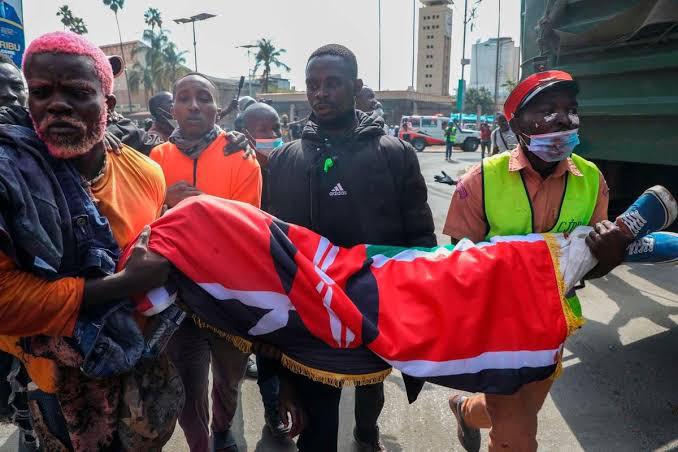
The Kenya National Commission on Human Rights (KNCHR) is calling for a more comprehensive approach to justice for victims of protests and demonstrations one that goes beyond financial payouts.
As President William Ruto’s special committee begins reviewing cases of those affected by past protests, KNCHR is urging the team to widen its lens and adopt a full reparations framework that includes truth, acknowledgment, and healing.
“We need to look at compensation in the broader concept of reparations,” said Simon Omondi, KNCHR’s Deputy Director of Programmes. “It’s not just about moneyReparations would also entail recognition, memorialization, and symbolic acts of justice.”
Omondi was speaking at the launch of a new KNCHR report, The Right to Defend Rights, which chronicles the status of human rights defense in Kenya over the past two years a period marked by political upheaval, suppression of protests, and escalating assaults on civil liberties.
In July, President Ruto formed a committee led by legal scholar Prof. Makau Mutua to develop a framework for compensating victims both police officers and civilians who were either killed or injured during protests since 2017. The task force was given 120 days to deliver its findings.
But KNCHR believes that timeline is too short for such a complex and emotionally charged issue.
“There’s a lot that needs to be done profiling victims, ensuring public participation, building trust in the process,” said Omondi. “Rushing it in 120 days risks overlooking deeper issues.”
The commission is pushing for a longer-term view that prioritizes justice and healing over a quick payout.
That includes a call for the state to take responsibility for rights violations something the new KNCHR report says is long overdue.
Despite Kenya’s strong constitutional protections and international human rights commitments, the report paints a grim image of the reality for human rights defenders.
Between 2020 and 2022, at least seven defenders were killed, two disappeared in mysterious circumstances, and more than 130 were arrested arbitrarily.
“On paper, we’ve made progress. But in practice, activists still face harassment, threats, and even violence,” said KNCHR Commissioner Sarah Bonaya. “This contradiction between law and reality needs urgent attention.”
The report also flags continued misuse of the Public Order Act a law often used to stifle peaceful protests and limit freedom of assembly.
Omondi noted that while the government is responsible for protecting human rights, it’s often the one undermining them especially in areas like service delivery and corruption.
“The state is the primary duty bearer, but unfortunately, it’s also the biggest violator when it comes to systemic issues,” he said.
KNCHR is now calling on the government to fully implement the legal and constitutional safeguards already in place and to treat victims of injustice with the dignity they deserve.