Kenya must position itself as a producer of technology rather than simply a consumer, Principal Secretary in the State Department for Science, Research and Innovation (SRI), Prof. Shaukat Abdulrazak, has said.
Speaking during a media roundtable at the National Research Fund (NRF) festival at Egerton University, the PS expressed concern that six decades after independence, the country is still heavily reliant on imports.
“It is unacceptable that after 60 years we are still consuming what others produce. We need to safeguard our people through science, research and innovation, and build our own capacity to produce,” Prof. Abdulrazak said.
He pointed to technologies such as electron beam irradiation, already in use globally for food preservation and pest control, as examples of innovations Kenya can adopt and scale locally.
The PS linked the need for innovation to pressing national challenges including child stunting, food insecurity affecting 1.8 million Kenyans, undernutrition among half a million children, and rising cancer cases. He argued that local research could provide affordable and sustainable solutions.
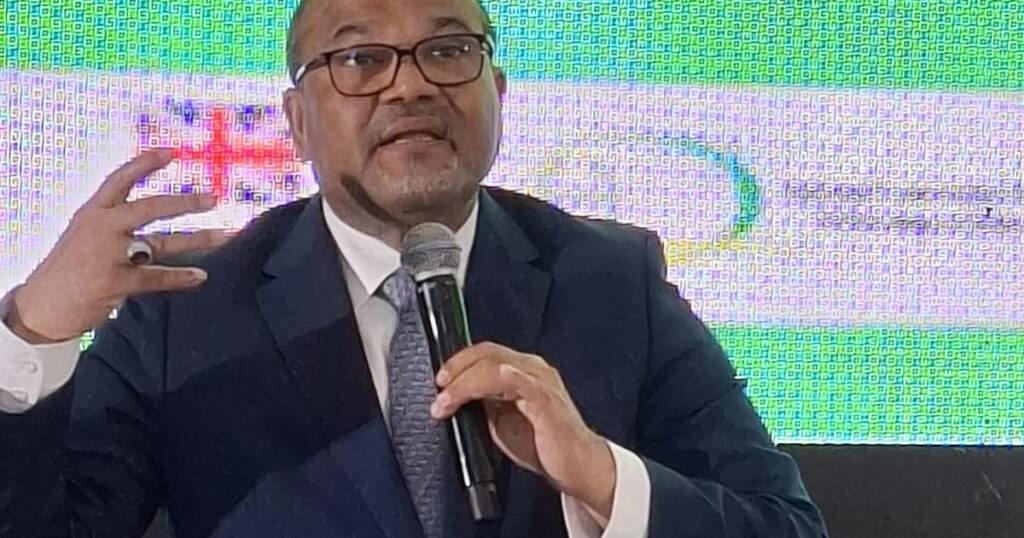
Prof. Abdulrazak also called for stronger investment in research and innovation, faulting Parliament for failing to meet the long-promised target of allocating 2% of GDP to research.
“We are still at 0.8 percent. If we want to catch up with Asian economies like Singapore, Malaysia and South Korea, we must scale up funding and give our scientists the resources to deliver,” he said.
Baringo MP Joseph Makilap, a member of the Education, Research and Innovation Committee, pledged that Parliament was ready to support stronger funding and legislation to anchor research into law. “If we don’t invest in research, we shall remain a dumping ground for other countries’ products. We must deliberately industrialize,” Makilap said.
Egerton University scholars also highlighted ongoing projects, including the establishment of an International Center for Genetic Engineering and Biotechnology, expected to boost regional research capacity in the next two years.
Dr. Tonny Omwansa, CEO of the Kenya National Innovation Agency, added that Kenya is building a pipeline to commercialize research ideas into startups and ventures, particularly in agriculture and technology.
The PS said the government would engage the Kenya Revenue Authority on possible tax reliefs and incentives for firms investing in research and pledged stronger collaboration with county governments, universities, and the private sector.
“We should not be followers; we can also lead. The only way to transform into a middle-income country is by trusting our scientists and scaling up research and innovation,” Prof. Abdulrazak affirmed.