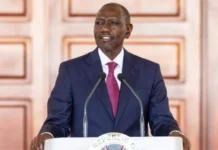
In a strategic move to reduce its debt burden and keep pressure off the economy, Kenya has decided to repay the $5 billion Standard Gauge Railway (SGR) loan in Chinese Yuan instead of US Dollars.
The move, announced on Tuesday by Treasury Cabinet Secretary John Mbadi, represents a significant change in the manner in which Kenya manages one of its largest foreign debts.
By changing the currency in which the debt is paid, the government estimates it will save the nation close to Ksh27.8 billion (approximately $215 million) annually in interest payments.
“It’s a great relief,” declared CS Mbadi, adding that the adjustment would reduce the cost of loan repayment and release resources for other critical needs.
The SGR loan, taken in 2013, funded one of Kenya’s most ambitious infrastructure projects ever a new Mombasa-Nairobi railway, and later Naivasha. The railway was a beacon of modernity, meant to spur business and ease transportation.
But even as the routes created new connections, the loan on which they were premised strained the nation’s purse. Repayment over time tied to the US Dollar became more expensive as global interest rates rose and the Kenyan shilling depreciated.
With the switch to Yuan, Kenya will not feel compelled to dash to dollars to pay in time. Economists indicate this may reduce demand for the dollar locally a key factor in easing pressure on the shilling, which has been under pressure for decades.
This is not about shilling-saving,” said a finance analyst based in Nairobi. “It’s about stability. It’s a smart thing to do to protect our currency and reserves.”
The Central Bank of Kenya will stand to benefit from the reduced requirement to exhaust its dollar reserves, improving the country’s import cover and aiding investor confidence.
Nonetheless, Kenya is not out of the woods yet. The country remains at high risk of debt distress, according to both the IMF and rating agencies.
Earlier this year, the government’s move to raise taxes through the 2024 Finance Bill caused mass protests and public outcry, eventually leading President William Ruto to backtrack on several of the contentious proposals.
That public outrage sent a loud message: Kenyans feel the pinch, and they want long-term fixes not increased taxation.
The government has since turned its attention to other solutions, ranging from loan restructuring and now converting foreign loans to more palatable terms.
Even though this currency exchange may seem like a technical adjustment, its impact would be dramatic. Saving Ksh27.8 billion annually could ease fiscal tension and channel funds into high-priority needs be it medical treatment, education, or road maintenance.
And for the common Kenyan, anything that keeps the integrity of the shilling intact and sustains inflation control is welcome news.
As the country continues on towards paying its debt, the hope is that gestures such as this one will build a more robust, independent economy an economy that can grow without the encumbrance of unsustainable debt.