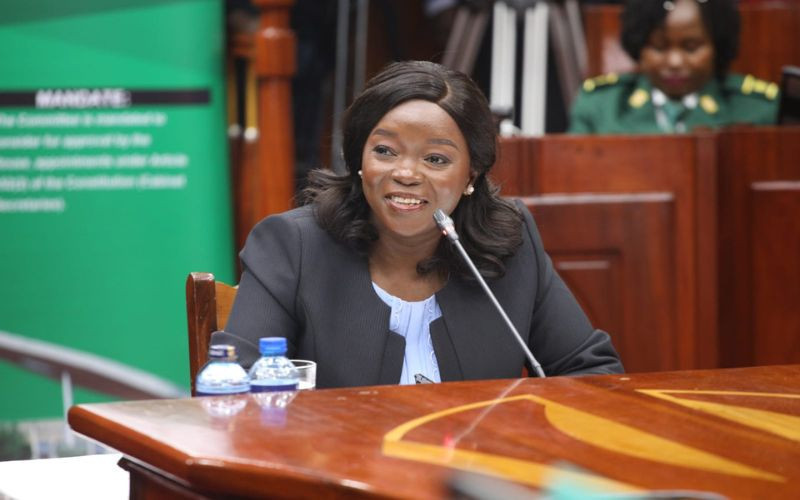
Kenya has continued to push for stronger community involvement in climate action, with the government saying local communities must directly benefit from environmental and carbon projects taking place in the country.
Environment Cabinet Secretary Deborah Mulongo said the government has introduced benefit-sharing measures to ensure communities earn from climate projects carried out on public and community land.
According to the CS, communities will receive at least 40 per cent of earnings from land-based climate projects on public or community land, while non-land-based projects will return at least 25 per cent to local communities.
She said the move is aimed at making sure climate action improves the lives of ordinary wananchi instead of only benefiting investors and organisations.
During the bilateral discussion, Mulongo also pointed out Kenya’s growing cooperation with foreign nations via agreements on carbon trade and climate finance according to Article 6.
She reported that currently, there are existing agreements with Switzerland and Sweden related to Internationally Transferred Mitigation Outcomes (ITMOs). The agreement with Singapore is still under discussion.
As per the CS, the partnerships will enable Kenya to obtain climate finance, technology transfer, and support environmental conservation measures.
Moreover, during her address, she emphasized that Kenya had taken the necessary steps towards transitioning from voluntary EPR regulations to mandatory ones according to the Sustainable Waste Management Act.
This will entail producers being responsible for waste created by their products when it goes past the consumer.
The Ministry claims that these efforts will lead to increased recycling of waste materials, reduced pollution levels and support the development of the circular economy where waste is recycled.
However, in her remarks, the CS pointed out the importance of collaboration among African nations when dealing with environmental problems and opportunities within carbon markets.
The CS noted that environmental issues including climate change, pollution, and conservation are not bound by boundaries, and thus regional cooperation becomes essential for Africa to grow in a green fashion.
Further, Mulongo stated that through Kenya and Malawi and the rest of the African nations, the continent could establish itself as a leader in green growth and climate solutions.
Senior officials from the Ministry of Environment, NEMA, and the climate change sector were present during the discussion.