The Kenya National Highways Authority (KeNHA) has identified four road corridors covering 536 kilometres for upgrading under a proposed Ksh77.8 billion project targeting rural roads in seven counties.
The project, which the government plans to finance with support from the World Bank, will cover parts of Elgeyo Marakwet, Uasin Gishu, Kericho, Bomet, Nandi, Narok and Nakuru counties.
In a market engagement notice, KeNHA invited contractors and consultants to give their views on the proposed works before the procurement process begins.
The four roads earmarked for upgrading are the 110-kilometre Kericho-Kenegut Border Road, the 150-kilometre Kenegut Border-Nyaru Road, the 133-kilometre Neissuit-Embomoss Road and the 143-kilometre Embomoss-Mariwa Road.
The Kericho-Kenegut Border Road will pass through Ainamoi, Poiywek, Chepkoiyo, Koisegem, Fort Ternan and Gilimori before reaching the Kenegut Border.
The Kenegut Border-Nyaru route will cover Mbogo Valley, Kamelilo, Maraba, Kabirer, Sirwa, Lessos and Kipkabus.
The other two corridors will connect several areas in the wider region. The Neissuit-Embomoss Road will pass through Salgaa, Elburgon, Turi, Muchorwe, Langwenda and Kamwaura, while the Embomoss-Mariwa Road will serve Chebole, Siongiroi, Labotiet, Kilgoris, Enoosaen and Anganga.
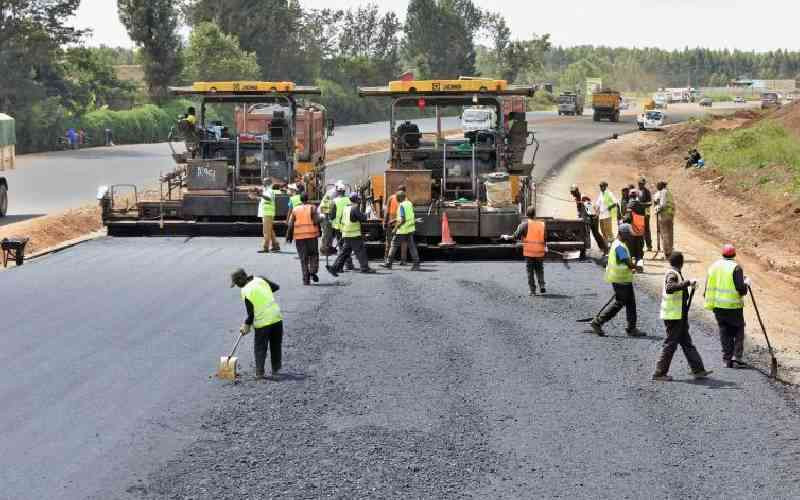
Under the proposed plan, the roads will be upgraded to bitumen standards, alongside safety improvements and other civil works to accommodate fibre-optic cables.
KeNHA intends to use a design-and-build approach for the works. The authority has also indicated that the final procurement plan and how the contracts are divided could change after receiving feedback from contractors and other industry players.
The proposed arrangement would see each road corridor divided into two contracts, one covering the road upgrade and another dealing with fibre-optic cable infrastructure. This would bring the total to eight contracts across the four corridors.
Beyond the road upgrades, the wider Roads for Rural Economic Development Project will also cover bridge construction in the Lower Eastern region, community socio-economic infrastructure and improvements to facilities used for cross-border trade.
The project is estimated to cost US$600 million, equivalent to about Ksh77.8 billion. The government intends to seek financing from the World Bank through the International Development Association (IDA), alongside a contribution from the national government.
However, the proposed financing has not been confirmed as fully approved, and the procurement information does not specify how much the government will contribute.
The current market engagement exercise is intended to help KeNHA gather views on construction costs, technical requirements, contractors’ capacity and possible challenges before finalising the procurement plans.