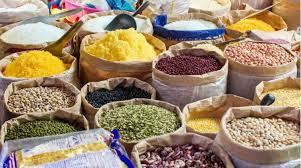
Kenyans have been warned to be cautious about the quality of cereals sold in some markets after tests revealed dangerous levels of aflatoxin contamination in food products commonly consumed across the country.
The warning was issued by the Kenya Agricultural and Livestock Research Organisation (KALRO), which said samples collected from various markets showed aflatoxin levels far above the recommended safety limit.
Speaking during celebrations to mark World Food Safety Day on Tuesday, KALRO Director General Patrick Ketiem said some samples recorded contamination levels as high as 500 parts per billion (ppb), compared to the maximum safe limit of 10 ppb.
“The only acceptable limit allowed by the World Health Organisation is 10 parts per billion. When you exceed ten, it can no longer be accepted,” said Ketiem.
These are toxic materials, made by the fungi found growing on the agricultural products such as maize, millet, sorghum and groundnuts, particularly in those crops that are not well dried or stored.
To many Kenyans, the cereals constitute part of their diet, therefore making this a worrying trend.
Research has established that prolonged consumption of foods with aflatoxins leads to various diseases such as liver cancer, compromised immune systems, birth defects and underdeveloped children.
According to KALRO, one of the challenges affecting farmers and merchants is the exorbitant cost associated with testing food products, a task many small scale producers can hardly afford.
“The cost of food safety testing is still very prohibitive for most farmers,” noted Ketiem, requesting stakeholders to lower prices.
With these findings, the Kenya Bureau of Standards (KEBS) is expected to strengthen their surveillance and inspection mechanisms in order to eliminate unsafe food from the local markets.
Geoffrey Muriira, KEBS’ Quality Assurance Manager, stated that food safety ought to be viewed as a collective responsibility of farmers, vendors, food controllers and consumers.
“If it is not safe, then it is not food,” he added.
According to experts, careless handling after harvesting, insufficient drying of grains, and incorrect storage are still some of the common causes of contamination of cereals.
This advice comes in light of increased initiatives by the government to enhance food safety and ensure that dangerous foods do not make it to the market.