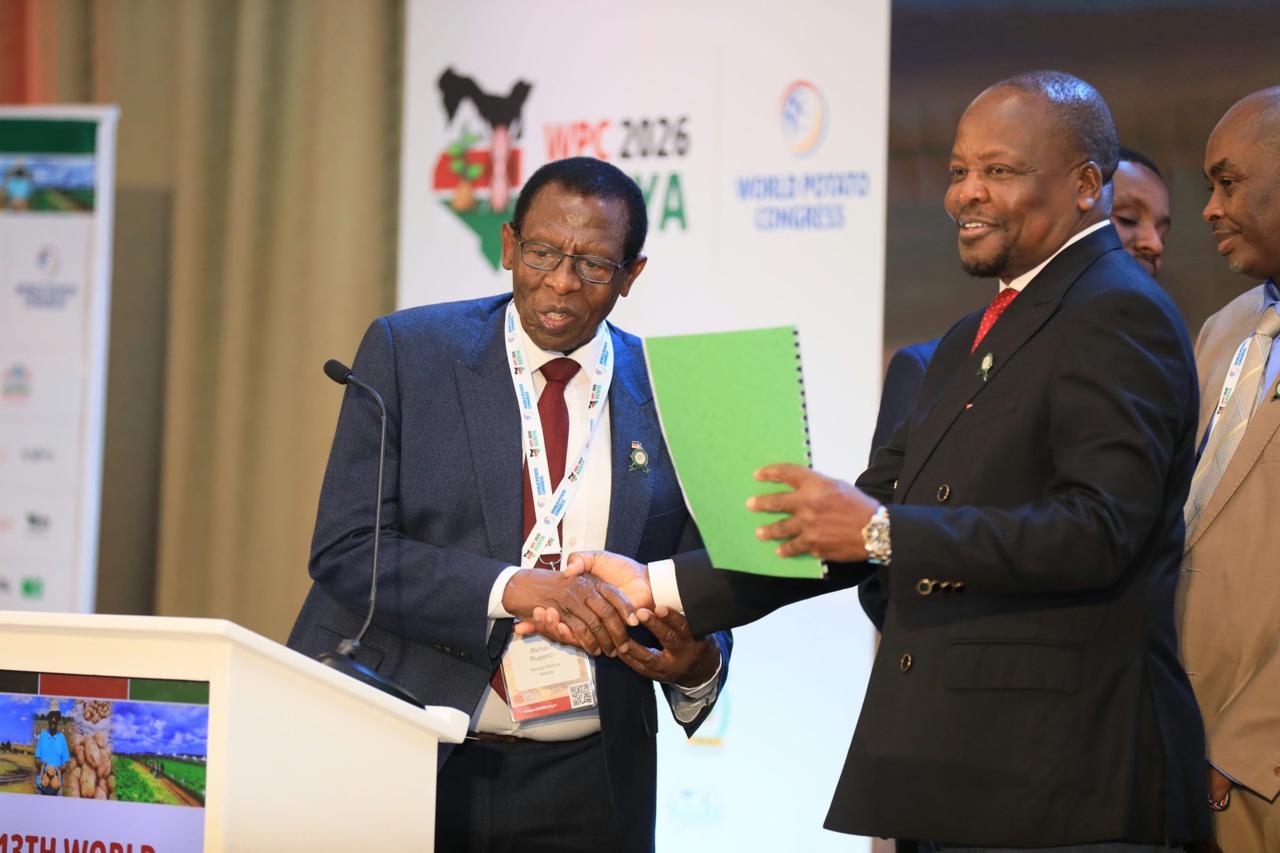
Agriculture Cabinet Secretary Mutahi Kagwe wants more investment in potato farming, with the government looking at ways to improve access to quality seeds, reduce post-harvest losses and support local processing.
The Ministry of Agriculture is working with ASARECA, FIPs-Africa, Egerton University and the National Potato Council of Kenya to expand the use of Rooted Apical Cuttings technology.
The technology is being used to multiply planting material for varieties such as Shangi, Unica and Wanjiku. The aim is to help small-scale farmers who struggle to get enough quality potato seeds.
Through the Kenya Sustainable Potato Initiative, the ministry is also working with Egerton University and the National Potato Council of Kenya to reach 150,000 farmers. The programme seeks to improve production, crop quality and the adoption of farming methods that can cope with changing climate conditions.
But Kagwe has warned that efforts to increase seed production must go hand in hand with proper inspection and certification.
The Kenya Plant Health Inspectorate Service (KEPHIS) is responsible for testing and releasing potato varieties, certifying planting material and monitoring pests and diseases. Kagwe called for action against uncertified and counterfeit seeds, which threaten efforts to improve potato farming.
The CS also wants farmers to grow a wider range of potato varieties to meet the needs of processors, especially businesses making chips and crisps. Having potatoes suited to these products could support local manufacturing and open up more markets for farmers.
Storage is another area the government is focusing on. Kagwe pointed to cold chain facilities developed in 12 counties over the past four years, which are intended to reduce losses after harvesting, improve storage and help farmers reach markets.
At a preparatory meeting last week, Kagwe said he was ready to engage the National Treasury on proposals to zero-rate machinery used in potato processing.
He asked players in the industry to submit details of the equipment they need and explain what would help them invest in processing.
The CS also urged farmers to organise themselves into cooperatives and associations. Such groups can make it easier for them to access machinery, shared facilities and government support.
Other proposals discussed during the preparations included more practical potato farming training through the Kenya School of Agriculture. There was also a proposal to create a dedicated potato component within the Kenya Agricultural Data and Information Centre (KADIC) to support planning and innovation.
The issues are expected to feature at the potato congress in Naivasha, which will bring together farmers, researchers, seed suppliers, technology providers and potential business partners.
Held under the theme “Global Potato Partnership for Enhanced Food Systems, Nutrition Security, and Trade,” the meeting will provide a platform for participants to discuss challenges facing the sector and explore business opportunities.
Farmers will also take part in a field day where they can learn about new potato varieties, farming methods, processing and what the market requires.
This year’s programme includes a Teens Programme under the 4K Club to introduce young people to agricultural science, technology and business. A separate Women in Potato initiative will focus on women’s participation, leadership and empowerment in the industry.
Kagwe urged participants to come up with solutions that address the actual needs of farmers and businesses.
For Kenya, the focus is on getting more value from potatoes produced locally. Better seeds, improved storage and investment in processing could help cut imports, create jobs and give farmers more opportunities to earn from their produce.