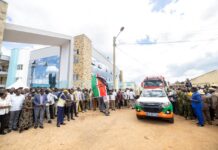
State House official Dennis Itumbi has challenged Kirinyaga residents to stop being defined by the traditional Mt Kenya East and West political blocs as the country heads to the 2027 General Election.
The head of Presidential Special projects wants residents to first agree on what they want for the county before deciding which politicians or political formations to support.
He has dubbed the initiative “The Kirinyaga We Want.”
Speaking in Mwea, Itumbi said Kirinyaga had for years followed political waves created elsewhere without getting enough in return.
“We are neither west nor east, we are Kirinyaga,” he said.
He accused the county of being good at “singing other people’s songs” while its own development needs were ignored.
Itumbi cited the county’s Mau Mau history, arguing that Kirinyaga produced freedom fighters but was left out of the Mau Mau Roads programme.
He also questioned why major road projects had moved towards neighbouring Nyeri while Kirinyaga continued to struggle with its own infrastructure needs.
The official said the new initiative will bring together farmers, youth, women, traders, professionals, clergy and other groups to identify the issues affecting residents.
Agriculture, roads, employment, education, healthcare and water are among the issues expected to form part of the proposed development agenda.
Itumbi singled out rice farming in Mwea, saying Kirinyaga should seek to become a major rice-producing hub in Africa.
“Rice farming is the biggest. We want to turn it into the biggest in Africa, not only the biggest in Kenya,” he said.
He also called for more qualified professionals from Kirinyaga to be considered for government appointments.
But beyond development, Itumbi’s message has a clear political undertone.
He wants residents to develop their own agenda and then challenge politicians seeking their votes to support it.
“We no longer want to follow politicians; we want politicians to follow our vision,” he said.
The push comes at a time when politicians from Mt Kenya are increasingly debating whether the region should approach the 2027 election as one bloc or through separate regional interests.
Itumbi, however, says Kirinyaga should not allow the East versus West debate to determine its political future.
He wants residents to decide what they want first and make politicians negotiate around those demands.
Whether “The Kirinyaga We Want” will remain a development agenda or grow into a wider political project will be closely watched as the 2027 campaigns gather pace.
For now, Itumbi is asking Kirinyaga to stop singing other people’s political songs and write its own.