Leader of the Majority Party Hon. Kimani Ichung’wah has raised grave concerns over what he termed an “emerging culture” of indiscipline, intoxication and misuse of firearms within the security services, even as he pressed the Ministry of Interior to decisively confront the growing threat of politically sponsored gangs ahead of the next General Election.
Speaking during a Speaker’s Kamukunji meeting convened by National Assembly Speaker Rt. Hon. (Dr.) Moses Wetang’ula and attended by Interior and National Administration Cabinet Secretary Hon. Kipchumba Murkomen, Ichung’wah cited recent fatal shootings in Karatina and Kitengela as evidence of a worrying breakdown in police discipline.
He referenced an incident in Karatina where a police officer allegedly shot dead a young man involved in a civilian altercation that did not initially involve the police. According to the Majority Leader, video footage circulating on social media suggested the officer may have been intoxicated or under the influence of narcotics at the time of the shooting.
“In the same breath, two weeks later in Kitengela, another officer, said to be a senior one shot a young man who was fighting in a pub,” Ichung’wah stated, questioning how armed officers were allowed inside bars late at night.
He recalled that during his formative years, it was an unwritten rule that police officers were not permitted to enter drinking establishments while armed a culture he now fears has eroded.
“I don’t know what happened to that culture,” he said. “I have personally seen armed officers intoxicated. I have seen an officer in uniform with a G3 rifle leaning against a bank wall, chewing miraa and muguka. What is happening to our security agencies?”
Ichung’wah challenged the CS to outline concrete steps being taken to stem alcohol and drug abuse within the disciplined forces, including the provision of psychiatric and psychosocial support.
He acknowledged that officers face the same social pressures as ordinary citizens but insisted that such challenges cannot excuse reckless conduct involving firearms.
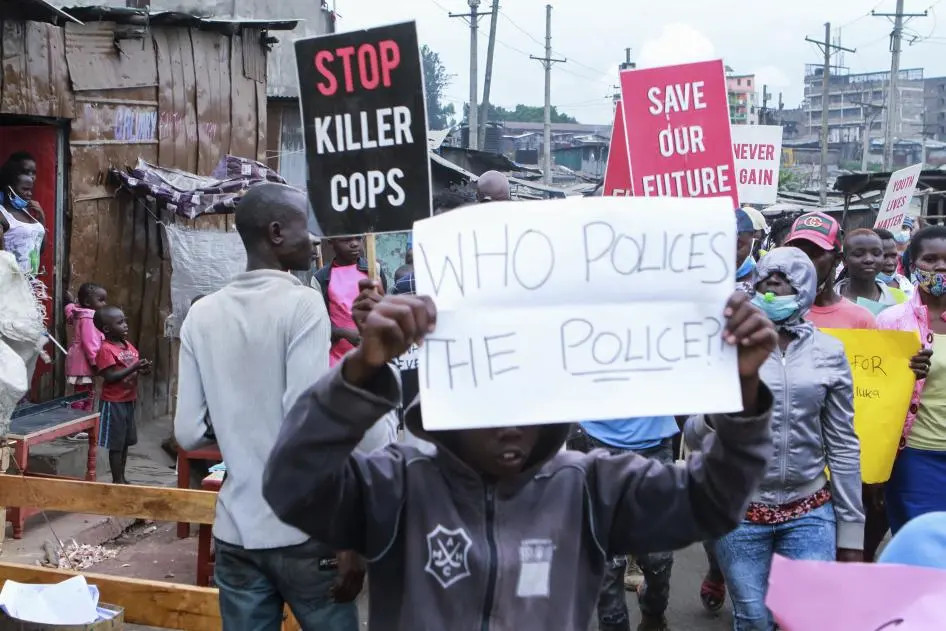
Beyond individual misconduct, the Majority Leader warned of a more dangerous evolution, the transformation of gangs into organized mobs being weaponised for political ends.
He cited recent unrest in parts of Nairobi, including Uthiru and Uhuru market areas, where criminal elements morphed into violent groups.
“These mobs are evolving. They are gangs that form into organised groups and are being used by political leaders as goons to disrupt rallies and meetings,” he cautioned. “As we head towards a general election, we are playing with fire.”
Ichung’wah further decried the June 24 invasion of Parliament, noting that despite suspects being clearly captured on camera, there had been no meaningful prosecutions. He alleged that some individuals affiliated with political leaders including Members of Parliament had secured court orders blocking their arrest and prosecution.
“We do not see any effort from Interior, the police or the Attorney General’s office to challenge those court orders,” he said.
“If we allow people to use injunctions to stop arrest for criminal activity, tomorrow anyone can commit a crime, run to court and walk free.”
He urged the Ministry to pursue policy and legal measures to prevent abuse of court processes that shield individuals accused of organising violence.
He stressed that intelligence services must act swiftly to “nip these mobs in the bud” before they escalate into national security threats.