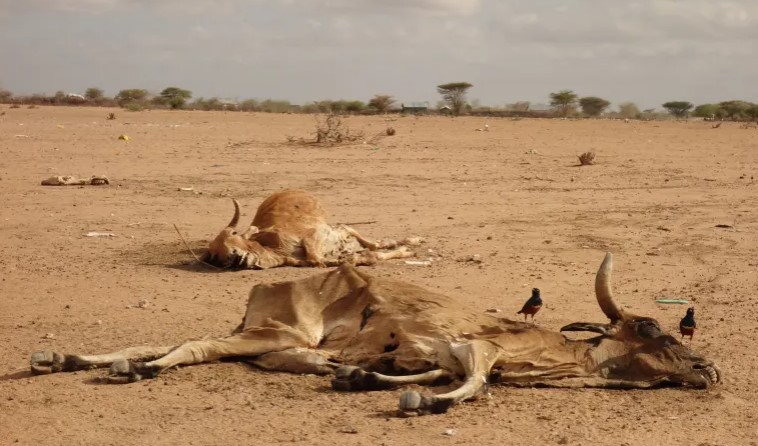
The government plans to establish national animal feed reserves to shield livestock and pastoralist livelihoods from recurring droughts that have previously killed more than 2.5 million animals and caused losses exceeding KSh50 billion.
Agriculture Cabinet Secretary Mutahi Kagwe announced the initiative in Embu County, noting that drought has become a persistent challenge that demands long-term preparedness rather than emergency responses.
The reserves will consist of hay, silage and other drought-tolerant fodder, to be stocked during periods of surplus and released early in dry seasons based on early warning systems.
County governments will take the lead in planning and distributing the feed, with support from the national government.
Cooperatives will serve as last-mile delivery agents to ensure fodder reaches livestock owners in good time, helping to prevent animal deaths and distress sales.
The government will also strengthen controls on livestock movement to limit the spread of Foot and Mouth Disease and other outbreaks, step up vaccination programmes and enhance biosecurity at livestock checkpoints.
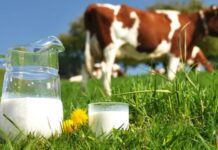
Speaking at the same event, Kagwe urged dairy farmers to focus on improving feeding and management practices to raise productivity instead of expanding herd sizes.
Embu County produces about 101.3 million litres of milk annually, but average yields remain low at eight litres per cow per day. He said output could more than triple with improved feeding and stronger cooperative coordination.
Additional funding has been approved for the installation of more milk coolers in Embu to reduce post-harvest losses and support quality-based payment systems.
Kagwe said the strategy—built around feed reserves, disease control, cooperative-led subsidies and cold-chain expansion—aims to end reactive drought responses, protect pastoralist incomes and strengthen national food security.