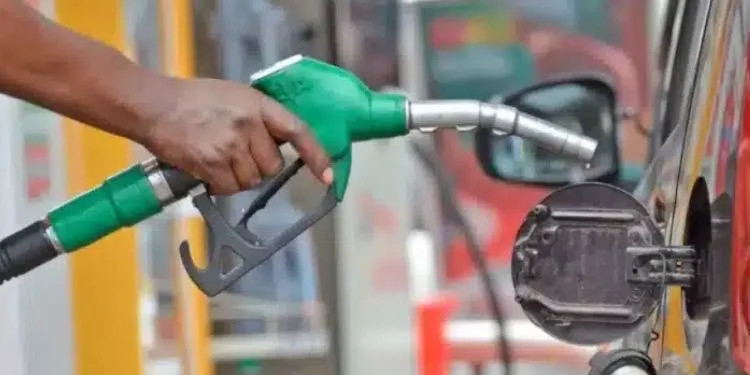
Kenyans might have to spend more money buying fuel in the upcoming week. Fuel dealers have issued warnings about the possibility of an increase in petrol prices during the next revision period.
Industry experts have predicted that the cost of petrol could be increased by Ksh30 to Ksh60 per litre from April 14. This means that petrol would be sold at the highest cost of Ksh231 per litre.
According to Martin Chomba, who leads the Petroleum Outlets Association of Kenya (POAK), fuel costs in Kenya are being maintained currently due to the fact that most of the fuel sold has been shipped to the country before international prices began to soar.
Chomba further noted that the new shipments are costly hence prices should be adjusted accordingly. The reason behind the increase is that petrol in the country is becoming expensive.
“The prices being paid are those of old stock. The new stocks are costly, thus prices have to be revised,” said Chomba.
The POAK boss also cited the example of other countries where fuel prices have been increased to over 30 percent recently. For instance, Tanzania hiked its fuel prices in
Chomba pointed to what is happening in the region, noting that Tanzania recently raised its fuel prices by over 30 per cent. He warned that Kenya could face a similar situation.
He also cautioned that holding prices down for too long could create supply problems. According to him, Kenya relies heavily on imported fuel and does not have enough reserves to last long if the supply is disrupted.
“We don’t keep large reserves. What we have can only take us for about three to four weeks. If the ships delay, then we could run into trouble,” he said.
But the government has moved to calm fears. Government spokesperson Isaac Mwaura said there is no immediate plan to increase fuel prices.
He said Kenya has already received fresh fuel shipments for April and that the situation is under control for now.
“There is no need for panic at the moment. We have supply and we are watching how things unfold,” Mwaura said.
Even so, some fuel dealers, especially in smaller towns, say they are already struggling to access supply. In some areas, fuel is said to be in storage but has not yet reached petrol stations.
There are also fresh concerns about the quality of some imports, with reports suggesting that some fuel in storage may have higher sulphur levels than required.
As pointed out by Chomba, after the fuel reaches the Port of Mombasa, it is held in storage tanks operated by the Kenya Pipeline Company and others. However, the ownership of the fuel remains that of the company that brought it to the country.
In addition, the fuel has to undergo clearance processes from the Kenya Revenue Authority, which may take some days, thus affecting the supply process.
Although the government can intervene by providing finances such as the Petroleum Development Levy, it is unlikely to play a major role in determining the price paid by consumers since the international market prices of crude oil are likely to dictate the prices.
With the next price review just around the corner, motorists across the country are now waiting to see whether the expected increase will hit their pockets.