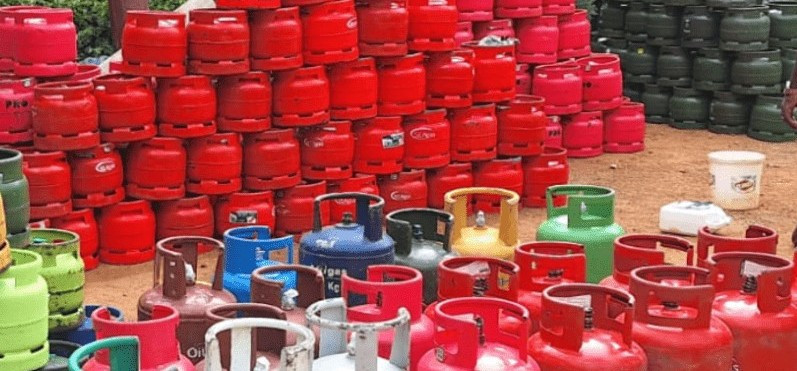
Kenyan households that rely on cooking gas could pay more from next month following a rise in international prices of propane and butane, the two main gases used to produce Liquefied Petroleum Gas (LPG).
The increase in global prices is expected to put additional pressure on the local LPG market, with Kenya sourcing a significant share of its cooking gas from the Middle East.
LPG is produced by blending propane and butane. Their prices are influenced by changes in global supply and demand, as well as developments in major producing regions such as Saudi Arabia.
Propane and butane prices rise
Data from Saudi Aramco, a major LPG processor and supplier in the Middle East and Asia, shows that the price of butane increased by 25.8 per cent in August.
The price rose from Ksh64,620.50 to Ksh81,326 per tonne during the period.
Propane prices also went up by 23.2 per cent, rising from Ksh51,929.50 to Ksh63,973.50 per tonne.
The increases have been reported amid renewed conflict involving the United States and Iran, which has disrupted fuel supply routes in the Middle East, including through the Strait of Hormuz.
The disruptions have also affected Saudi Arabia’s Yanbu port, which is used as an alternative route for fuel shipments when movement through the Strait of Hormuz is affected.
LPG exports from Yanbu to Asian markets dropped from 302,600 tonnes in June to 240,300 tonnes in July.
The volume fell further to 71,200 tonnes in August, while preliminary market data indicates exports could drop to about 51,700 tonnes in September.
How much Kenyans currently pay for gas
The expected increase could come as a further burden to households already paying different prices depending on the brand and location.
Currently, refilling a 6-kilogramme gas cylinder costs between Ksh1,100 and Ksh1,600, while a 13-kilogramme cylinder costs between Ksh2,200 and Ksh3,500.
A reduction in LPG supplies to Asian and African markets could affect Kenya if international prices remain elevated.
Kenya prepares new LPG storage facility
The anticipated rise in prices coincides with efforts by the government to enhance the capability of the country in importing and storing LPG in the local market.
Taifa Gas is in its final phase of establishing an LPG import terminal in the Dongo Kundu Special Economic Zone in Mombasa.
Hydrostatic testing is currently being undertaken in preparation for the official opening of the plant.
The project has cost Ksh16 billion (€107.5 million) and is anticipated to become the biggest LPG storage facility in East Africa.
The facility will contain a storage capacity of 30,000 tonnes stored in 12 spherical pressure tanks.
The 30 acres of land has been constructed in such a way that the capacity can be increased up to 45,000 tonnes.
The facility is expected to boost the capability of Kenya in storing LPG given that the country relies on imported cooking gas.