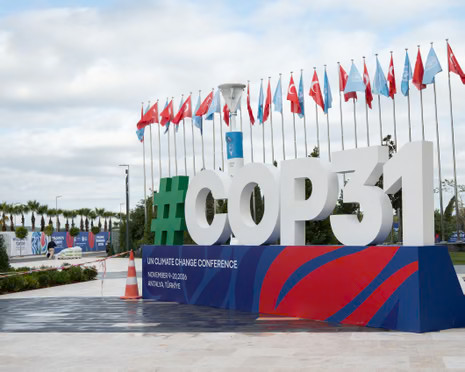
The 31st United Nations climate conference opened in Turkey on Monday, November 9, with countries facing pressure to move beyond promises and agree on practical steps to deal with rising global temperatures.
More than 100,000 people are expected to attend the two-week meeting in Antalya, where representatives from nearly 200 countries will discuss ways to speed up the shift to cleaner energy and raise funds to help developing nations deal with the effects of climate change.
The talks are taking place at a time when extreme weather events continue to affect different parts of the world. This year, Europe has experienced severe heatwaves, wildfires have spread in Indonesia, while a glacier collapse in Nepal triggered devastating floods.
Things may get even worse in case of an unusually powerful El Niño predicted for this year. This weather pattern can make the situation worse and increase the likelihood of 2026 or 2027 being the hottest year on record.
In September, the United Nations issued a warning saying that global warming was likely to pass 1.5 degrees Celsius above pre-industrial level. This is the target the countries agreed not to exceed during the Paris climate talks.
The campaigners call for tougher action on the part of the world leaders, who should focus on lessening dependence on fossil fuels and renewable energy.
“World leaders need to steer us clear of the edge and transition rapidly away from fossil fuels and increase renewable energy use, which is especially imperative at a time of the current energy price crisis,” said Rachel Cleetus, director of the Climate program of the Union of Concerned Scientists.
Pressure to move beyond climate pledges
Turkey is hosting COP31, while Australia is leading the negotiations under an arrangement reached after the two countries disagreed over who should host the meeting.
The two countries have described this year’s summit as the “implementation COP”, with a focus on turning earlier climate commitments into action.
Turkey has also introduced an action agenda that encourages countries to make voluntary commitments in areas such as artificial intelligence and waste management.
One of the main proposals is to increase the share of global energy demand met through electricity from about 20 per cent currently to 35 per cent by 2035.
However, the proposal could lead to disagreements over what qualifies as clean electricity. The European Union has called for “clean” electrification, raising questions about the role of fossil fuels in Turkey’s plan.
Countries agreed at COP28 in Dubai in 2023 to move away from fossil fuels, but negotiations on how to achieve that goal have made little progress.
At last year’s COP30 in Brazil, the final agreement did not directly mention fossil fuels after opposition from oil-producing countries. Brazil instead developed a voluntary roadmap outlining proposals for phasing out fossil fuels, which countries can adapt to their own circumstances.
Developing countries push for more climate funding
Financing is also expected to be a major point of discussion, with developing countries calling on wealthier nations to honour their commitments to support climate adaptation and recovery from extreme weather events.
African countries want COP31 to discuss increasing adaptation finance threefold. The funding is meant to help vulnerable countries pay for measures such as building sea walls and planting crops that can withstand drought.
However, developed countries have shown little appetite for making fresh financial commitments. A senior European Union official warned that there would be no political will for additional funding pledges.
The United States will also be largely absent from the negotiations after President Donald Trump withdrew the country from the Paris Agreement and did not send government officials to the summit.
A delegation from the US Congress is, however, expected to attend the meeting, with Democrats arriving after their victory in last week’s midterm elections.
Despite the difficult issues facing negotiators, Azerbaijan’s chief negotiator Yalchin Rafiyev said the mood at the talks was positive.
He urged countries to turn that atmosphere into concrete results during the two weeks of discussions.