The government has started emergency works around Lakes Baringo and Bogoria in Baringo County following rising water levels that have flooded farms, displaced families and damaged infrastructure.
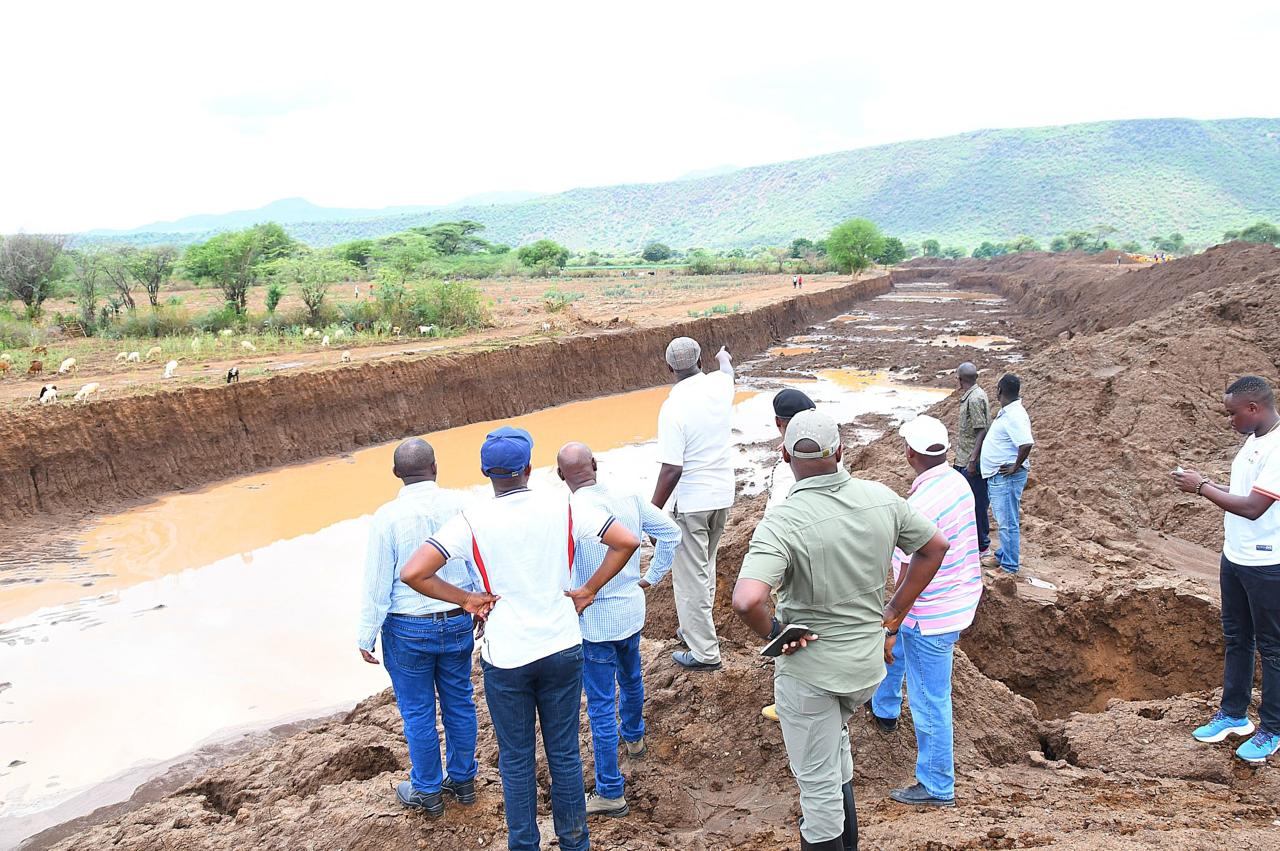
Principal Secretary for Irrigation Ephantus Kimotho inspected the ongoing works on Saturday, October 31, as the government steps up efforts to address the situation ahead of the predicted El Niño rains.
One of the main concerns is the shrinking distance between the two lakes. The distance, which stood at about 22 kilometres a decade ago, has reduced to approximately seven kilometres.
Officials are concerned that the two lakes could eventually connect, potentially affecting the freshwater ecosystem of Lake Baringo and the alkaline waters of Lake Bogoria.
Data presented during the inspection showed that Lake Baringo’s surface area previously fluctuated between 108 and 130 square kilometres, depending on the season.
However, by 2026, its water volume was estimated to have increased by between 1.4 billion and 1.9 billion cubic metres. The lake’s water level has also risen by between 12 and 14 metres, from 972 metres to approximately 984 metres above sea level.
The rising waters have submerged agricultural land and put pressure on communities living around the lakes.
Following public participation and technical assessments, the government has developed a series of interventions to address the problem.
The immediate plan involves restoring Rivers Loboi and Waseges to their original courses through river clearance, desilting and removal of accumulated sediments.
The works are intended to improve drainage and control the amount of water flowing into Lake Bogoria. According to the technical assessments, changes in river drainage patterns and increased water inflows have contributed to the rising water levels.
Kimotho also inspected ongoing drainage channel works aimed at managing excess water around the affected areas, including efforts to facilitate the controlled movement of water from Lake Baringo.
Beyond the emergency measures, the government is looking at using the available water to support irrigation and agriculture in the region.
Plans include developing water storage facilities, irrigation canals and check dams to support farming and livestock production.
Preliminary assessments have identified about 250,000 acres with irrigation potential, although the initial target is to develop 100,000 acres, subject to further feasibility studies.
The proposed developments are expected to support food production, create jobs and provide additional income opportunities for communities that largely depend on livestock and small-scale farming.
The ongoing works have also provided employment to some residents. More than 96 locals have so far been engaged in activities such as clearing river channels, excavation and operating machinery.
The multidisciplinary engineering team overseeing the interventions is led by Irrigation Secretary for Programmes Eng. Michael Thuita.
The government says the interventions will be implemented in phases, with the immediate focus on drainage works before moving to longer-term water storage and irrigation projects.