The government is rolling out a digital identification system that will give cows, goats and sheep unique identities in a new push to fight livestock theft and cattle rustling.
Agriculture and Livestock Development Cabinet Secretary Mutahi Kagwe is spearheading the nationwide rollout of the Animal Identification and Traceability System (ANITRAC).
The system will give each registered animal a digital record that can be followed throughout its lifetime.
The records will contain details such as the animal’s owner, origin, health status, vaccination history and movements.
Animals will be fitted with visual ear tags and electronic identification chips, with the information linked to a central digital platform.
This means authorities, veterinarians, traders and abattoirs will be able to verify an animal’s ownership and history.
For farmers, the system could make it harder for stolen livestock to be sold or moved without detection.
Kagwe has linked the technology directly to the fight against cattle rustling, saying animals registered under ANITRAC can be traced even after being moved across borders.
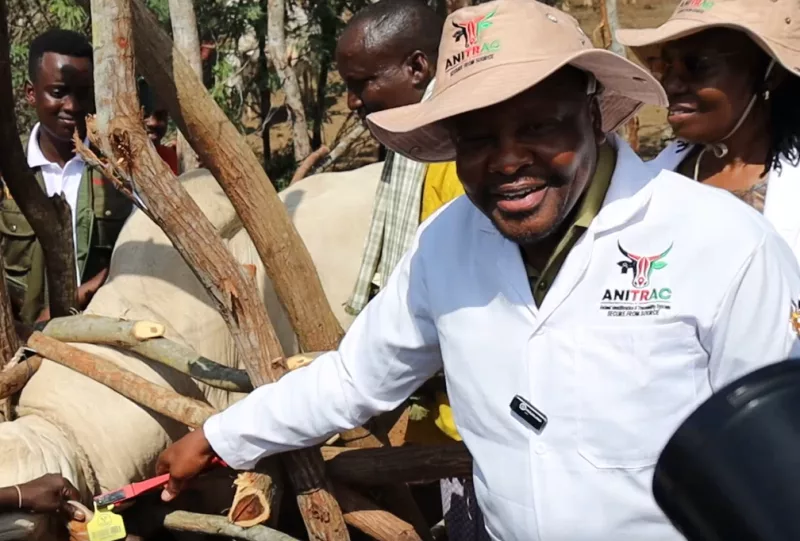
“Honestly, banditry is going to end and one of the reasons it is going to end is because of technology,” Kagwe said during a livestock tagging exercise in Nyeri.
“Once you are on ANITRAC, it doesn’t matter whether the animal crosses into Uganda or whether you are moving it from one clan to another, we will find it,” he added.
The system will also help the government track livestock diseases and improve disease surveillance by keeping records of vaccinations, treatment and animal movements.
But the government sees a bigger opportunity beyond fighting theft.
Kagwe says the digital records could make livestock verifiable assets, potentially helping farmers access financing using their animals as security.
“At any one time you know where they are and you can geographically locate them, so they become bankable assets,” he said.
The system is also aimed at opening more lucrative international markets for Kenyan livestock and meat.
International buyers increasingly demand information on where animals were born, what they were fed, which vaccines they received and where they were slaughtered.
“The modern meat consumer wants to know more than whether meat is safe,” Kagwe said, noting that buyers want to know an animal’s history from birth to the abattoir.
The government officially launched the ANITRAC rollout in July, with the programme targeting more than 22 million cattle across the country before being expanded to other livestock and counties.
The system is expected to create a digital trail from the farm to the market, making it easier to establish ownership, monitor animal movements and verify livestock destined for slaughter or export.
Kagwe has said the government wants every Kenyan animal to eventually have an identity and a traceable history.
“Going forward, every Kenyan animal should have an identity and a traceable history,” he said.
The rollout marks a major shift from traditional livestock identification to a system where the government can digitally track an animal from registration to sale, slaughter or export.