Members of Parliament have raised fresh concerns over the safety of more than 27,000 tonnes of imported sugar that was flagged by the Kenya Bureau of Standards (KEBS), fearing that the consignment could end up in the local market.
The issue came up during a meeting between the National Assembly Committee on Trade, Industry and Cooperatives and officials from the Kenya Sugar Board (KSB) on Tuesday.
Lawmakers questioned officials over the whereabouts and handling of 27,839 metric tonnes of sugar imported by Mombasa Sugar Refinery Limited and valued at about Ksh1.5 billion.
According to the MPs, the tests conducted by KEBS revealed that the sugar only met the standards of raw sugar, which is supposed to undergo further processing before being consumed by humans.
The MPs also asked for clarifications regarding the transportation of sugar from Mombasa to Nairobi despite the lack of appropriate clearance documents allowing the transport.
According to Shinali, the chair of the committee, the MPs required immediate clarifications to satisfy Kenyans that the sugar had not been sold in the market and people’s households.
“There is no clearance document provided in your documentation. We need to see the document that authorised the movement of the sugar from Mombasa to Nairobi,” Shinali told officials during the session.
Some lawmakers expressed fears that the sugar could be illegally released into the market, pointing to previous incidents where products declared unsafe allegedly ended up being sold to consumers.
In response, Kenya Sugar Board Chief Executive Officer Jude Chesire insisted that the sugar had not been released for public consumption and remained under tight security.
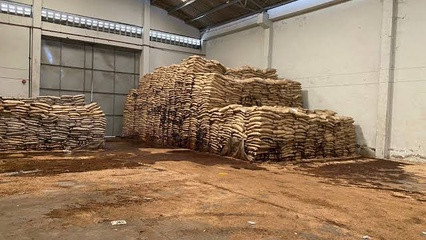
According to Chesire, police officers were deployed to guard the consignment after it arrived in Nairobi and the sugar was locked and sealed.
“We hired police officers to guard the consignment already in Nairobi, and it was locked and sealed,” Chesire told the committee.
The board also assured MPs that once the sugar is moved to Kisumu, trucks transporting it will be electronically tracked to prevent any diversion.
KSB Director for Regulation and Compliance Samwel Kembo said the sugar remained sealed throughout the transportation process and had not been distributed anywhere in the country.
“The sugar was never diverted or distributed in the country,” Kembo said.
Sugar was sourced from South Africa and landed at the port of Mombasa in February. It was only detected by officials when they realized there were additional 1,481 tonnes that were not declared, leading to the whole consignment being subjected to verification by the customs department and other regulatory bodies in March.
This development is taking place at a time when the government is making attempts to rejuvenate local sugar manufacturing.