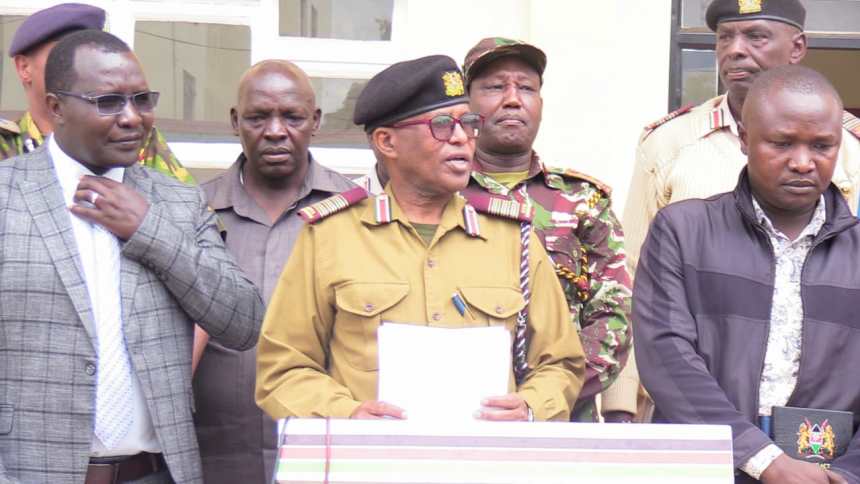
The government has ordered the immediate closure of more than 500 gold mining sites in West Pokot County following the tragic collapse of the Kambi Karaya mine on Sunday, June 15, which left one person dead and several others feared trapped underground.
West Pokot County Commissioner Khalif Abdulahi made the announcement on Monday during a press briefing, citing increased illegal and unsafe mining practices as the key reason for the sweeping directive.
The shutdown affects major mining areas including Kambi Karaya, Turkwel, Sekerr, Morita, and Romos across Pokot Central, Kipkomo, Kacheliba, and Kapenguria sub-counties.
Rescue operations at the Kambi Karaya site are being led by teams from the National Police Service, Kenya Defence Forces, and the Kenya Red Cross, as authorities race against time to retrieve those still trapped in the debris.
The fatal incident comes just days after a similar collapse on June 7 in Karon village, Turkwel, where four miners died and five others were injured.
Commissioner Abdulahi revealed that most of the affected mining sites were operating without licenses from the Ministry of Mining. “We are witnessing a dangerous surge in illegal mining activities that are not only unregulated but also hazardous to both people and the environment,” he said.
He further raised concern over extensive environmental degradation in the region, including the pollution of River Turkwel, which he noted is now unfit for domestic use. The commissioner also linked the mushrooming of illegal mining to a spike in social issues such as child labour, early marriages, and school dropouts.
To enhance regulation and promote safe artisanal mining, Abdulahi said a county mining office has been established. Miners and investors have been given a three-month window to regularize their operations in line with safety and licensing requirements.“We will not allow our people to risk their lives in unsafe mines,” he emphasized, calling for full cooperation from local communities and stakeholders in the sector.