Kirinyaga Governor Anne Waiguru’s efforts to expand access to safe and affordable water have attracted international attention, with a World Bank and Mozambique delegation visiting the county to learn from its innovative eWATER model.
The delegation toured the eWATER project in Gathigiriri Ward, Mwea, where it examined how technology, community participation and affordable tariffs are being used to improve access to clean water in rural communities.
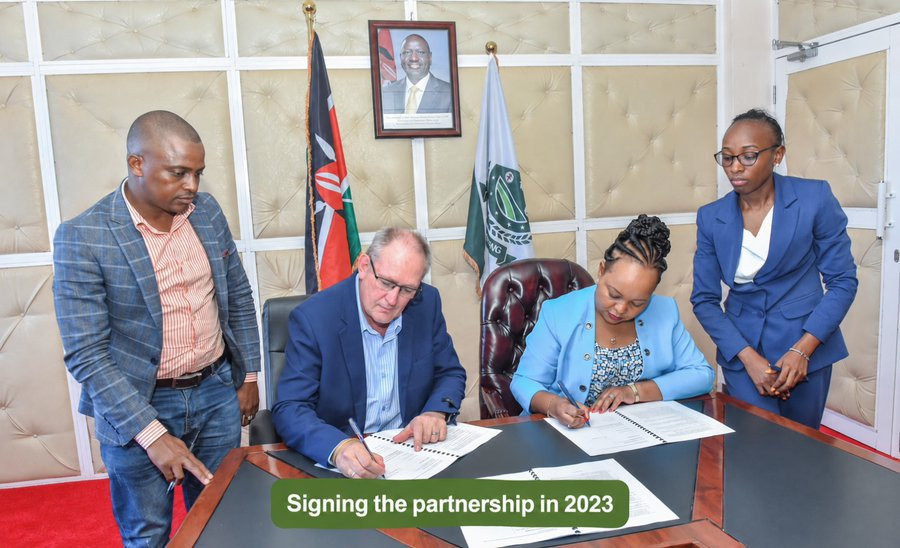
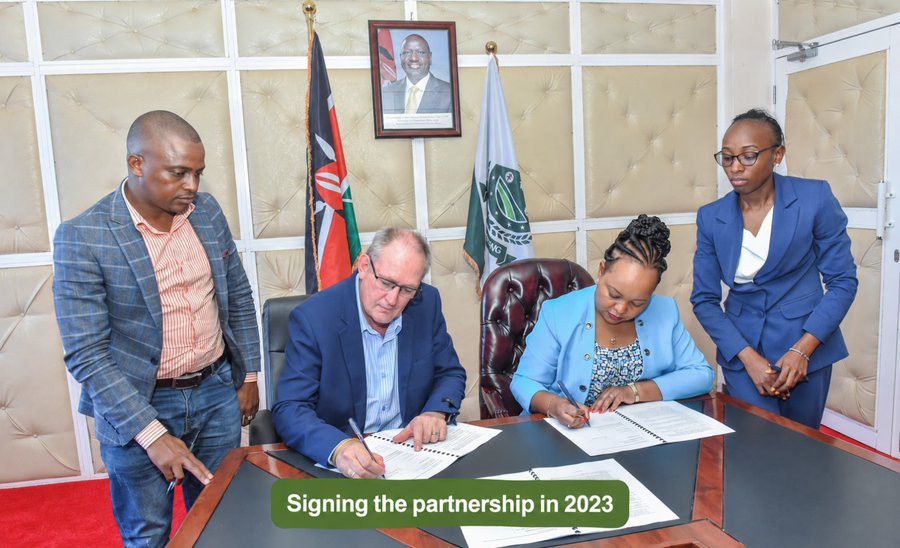
Kirinyaga has partnered with eWATER since 2019, with the company designing, financing and installing smart water systems while the county provides infrastructure, land access and regulatory support.
Speaking during the visit, Kirinyaga County Executive Committee Member for Environment Kinyua Mutugi said the partnership had significantly improved water access in Gathigiriri.
“We have partnered with eWATER, a private enterprise, to provide water to the people of Gathigiriri Ward, which was previously underserved with clean water. The project has been very successful,” Mutugi said.
The project has installed 177 community smart taps, 83 household connections and six institutional connections, serving about 17,000 residents across seven villages. Residents pay Sh5 for a 20-litre jerrycan of treated water.
Waiguru said her administration was also investing heavily in water infrastructure, with Sh200 million allocated in each of the last and current financial years.
“To ensure the residents also access clean domestic water, we have partnered with eWATER organisation to undertake projects that serve about 7,000 residents in Mahigaini, Kirogo, Kamucege and part of Tebere with clean treated domestic water,” Waiguru said.
The governor added that Kirinyaga was implementing 38 water projects in the current financial year and had undertaken more than 70 projects across different wards.
The model has particularly attracted the attention of the World Bank and Mozambique officials, who are exploring approaches that could be adopted to improve rural water access in Mozambique.
World Bank representative Chantul Richey said Kenya had been selected because of its experience in delivering water services to rural communities.
“We always talk about how Kenya is good at distributing water in rural areas and how the systems work and are different, innovative and affordable,” Richey said.
Mozambique’s Agua Segura project coordinator Caudina Bebane said the delegation was interested in understanding how communities participate in managing water services and how affordable tariffs encourage consumers to pay.
“We have come to learn about preserving water, making water available and learning about tariffs and what makes people pay for water willingly,” Bebane said.
For residents, the project has provided an alternative to irrigation canals that were previously used as domestic water sources.
Freshia Wambui, an eWATER consumer from Kiriko Village, recalled the challenges residents faced before the project was introduced.
“Before eWATER, we used to consume water from the canals, which was very dirty. It was possible to find used diapers and other waste in the water,” she said.
Wambui said access to treated water had improved hygiene in the village and made it safer for residents to drink, cook, wash clothes and care for children.