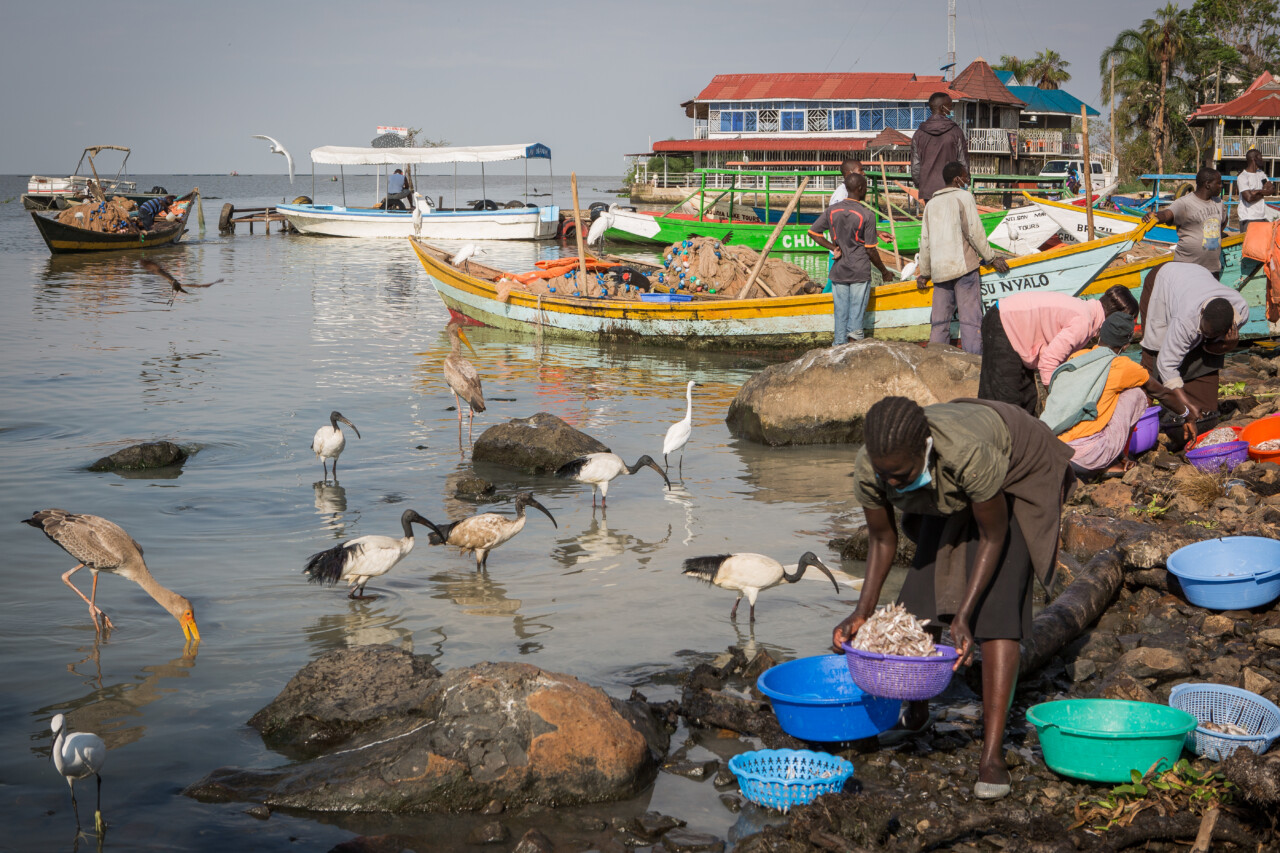
Millions who rely on Lake Victoria for food, water, and livelihoods are facing a growing crisis, as a new regional study reveals alarming pollution levels in urban areas around the lake.
The month-long scientific assessment, commissioned by the Lake Victoria Basin Commission (LVBC) and supported by GIZ, covered 44 sites across Kenya, Uganda, and Tanzania.
Key urban centres—including Kisumu, Kampala, Entebbe, and Mwanza—showed severe contamination from untreated wastewater, agricultural runoff, and solid waste.
Water samples from surface and bottom layers were tested for physical, chemical, and biological parameters.
Findings revealed high levels of nitrogen and phosphorus, which fuel harmful algal blooms, along with dangerous concentrations of heavy metals like mercury and lead.
“This is no longer speculation—we now have hard data showing the lake’s decline,” said Eng. Simon Otoung of LVBC. He added that fish are migrating away from oxygen-depleted nearshore waters, affecting local communities.
Kenya’s Deputy Director of Water Resources, Dr. Benjamin Kyalo, echoed the concerns: “Pollution is pushing fish away from coastal zones, threatening livelihoods.”
Uganda’s Dr. Obubu Peter noted it’s the first comprehensive transboundary assessment in over 20 years.
“Many treatment systems are outdated and unable to handle today’s pollutant levels. We’re nearing a tipping point,” he warned.
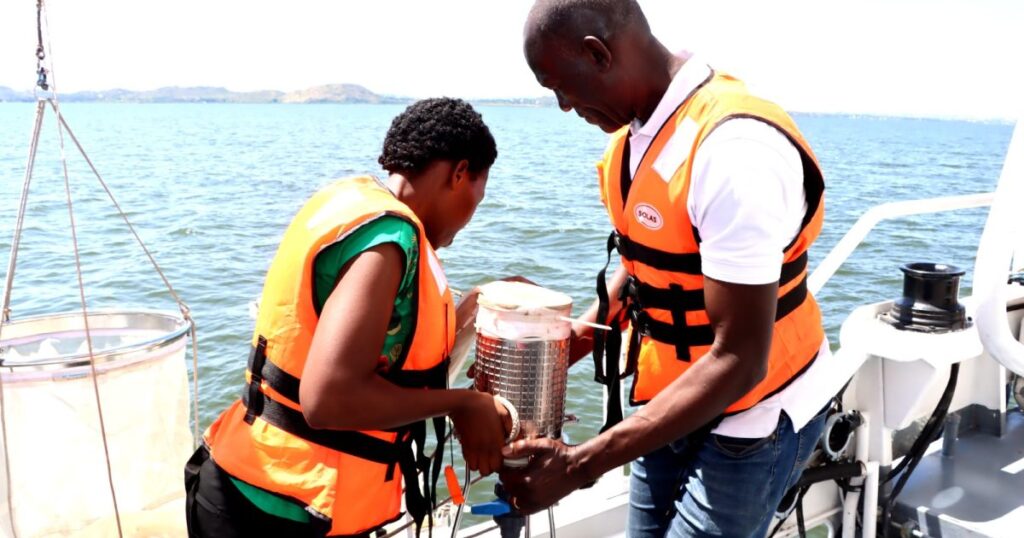
Researchers on Lake Victoria.
Tanzania’s Monica Mushi called for joint action: “Lake Victoria is a shared resource. What happens in one country affects all of us.”
LVBC Executive Secretary Dr. Masinde Bwire described the findings as a wake-up call. “We must now match science with political will.
This data will guide the 2025 State of the Lake Victoria Basin Report and shape future policy and investments,” he said.