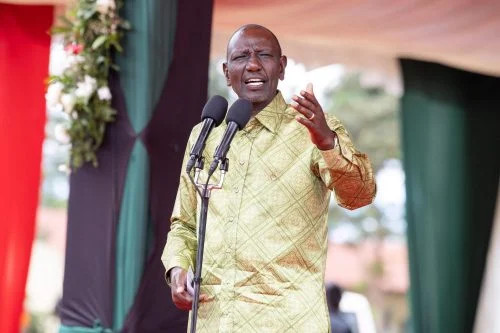
President William Ruto has defended his government’s handling of the ongoing fuel crisis, accusing political rivals of using the situation to gain political mileage instead of helping Kenyans find solutions.
Speaking during a live address from State House in Mombasa on Friday, Ruto said the rise in fuel prices is part of a wider global problem affecting many countries and not just Kenya.
“I know there are those who are trying to turn this global crisis into politics. People seeking to exploit public pain for political gain, making reckless claims and pretending there are easy options,” the President said.
Ruto maintained that leadership requires honesty and difficult decisions, adding that leaders should avoid misleading Kenyans for political convenience.
Although he did not mention anyone directly, the President’s remarks appeared to target former Deputy President Rigathi Gachagua, who has recently criticised the government over the rising cost of fuel and living expenses.
Gachagua has accused the Kenya Kwanza administration of misleading Kenyans by blaming the crisis on tensions around the Strait of Hormuz in the Middle East.
The former Deputy President argued that Kenya imports fuel mainly through Saudi Aramco and the Abu Dhabi National Oil Company (ADNOC), insisting the problem is linked to inflated costs and alleged profiteering within the government-to-government fuel import deal.
He has also faulted President Ruto over government spending and foreign travel at a time when many Kenyans are struggling with the high cost of living.
But while responding to the criticism, Ruto defended the government’s decision not to remove all fuel taxes and levies immediately, saying such a move would affect funding for important public services.
“There are those asking government to remove all taxes and levies on fuel immediately, but we must ask ourselves honestly, if we stop collecting these revenues entirely, what public services shall we stop funding?” Ruto posed.
The President questioned whether the country should stop road construction projects, reduce fertiliser subsidy programmes or cut funding for schools, hospitals and security operations because of the fuel crisis.
According to Ruto, the government is trying to balance the needs of wananchi while also protecting the country’s economy from long-term shocks.
He added that even developed countries with stronger economies are still struggling with the effects of global oil supply disruptions caused by conflict in the Middle East.