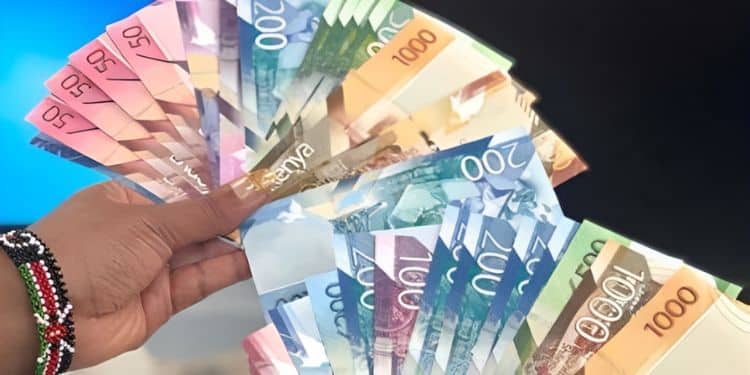
The Kenya Shilling remained stable against major international and regional currencies during the week ending June 18, 2026, supported by adequate foreign exchange reserves and continued liquidity in the financial markets, according to the latest weekly bulletin by the Central Bank of Kenya (CBK).
Forex Reserves Maintain Strong Position
CBK reported that Kenya’s foreign exchange reserves stood at USD13.149 million as of June 18, equivalent to 5.6 months of import cover.
The reserves remain above the statutory requirement of at least four months of import cover, providing a buffer to support external obligations and maintain stability in the foreign exchange market.
Shilling Trades at KSh129.55 Against Dollar
The local currency exchanged at KSh129.55 per US dollar on June 18, compared to KSh129.48 on June 11, reflecting minimal movement during the week.
CBK said the Shilling remained stable against major international and regional currencies during the review period.
Remittance Inflows Decline Slightly
Kenya received USD394.2 million in remittances in May 2026, down from USD397.8 million in April, representing a 0.9 percent decline.
The 12-month cumulative remittance inflows to May 2026 stood at USD5.008 million, a 0.5 percent decrease from USD5.033 million recorded during a similar period in 2025.
Despite the slight decline, CBK noted that diaspora remittances remain a key source of foreign exchange earnings and continue to support the country’s balance of payments.
Money Market Remains Liquid
The money market remained liquid during the week, with commercial banks’ excess reserves averaging KSh28 billion above the 3.25 percent Cash Reserve Ratio requirement.
The Kenya Shilling Overnight Interbank Average Rate (KESONIA) remained unchanged at 8.75 percent on June 18.
However, interbank activity slowed, with average transactions declining to 15 from 25 in the previous week, while the average value traded fell to KSh5.6 billion from KSh11 billion.
Strong Demand for Government Securities
The Treasury bill auction held on June 18 attracted bids worth KSh49 billion against an advertised amount of KSh24 billion, representing a performance rate of 204.1 percent.
Interest rates on the 91-day, 182-day, and 364-day Treasury bills increased marginally.
Meanwhile, the reopened 20-year and 25-year Treasury bonds auction on June 17 received bids totaling KSh77.6 billion against an advertised amount of KSh60 billion, translating to a performance rate of 129.4 percent.
NSE Market Records Gains
Activity at the Nairobi Securities Exchange (NSE) improved during the week, with key market indices posting gains.
The NSE All Share Index (NASI), NSE 25, and NSE 20 share price indices increased by 2.57 percent, 3.68 percent, and 1.90 percent respectively.
Market capitalization, total shares traded, and equity turnover also rose by 2.57 percent, 35.81 percent, and 38.77 percent respectively.
Bond Market Activity Improves
Domestic secondary bond market turnover increased by 14.91 percent during the week ending June 18, 2026.
In international markets, yields on Kenya’s Eurobonds declined by an average of 51.38 basis points, while yields for Côte d’Ivoire also fell. Angola’s yields, however, increased during the period.
Global Markets Ease After Ceasefire Deal
The US Dollar Index strengthened by 0.8 percent during the week. CBK said global inflation pressures eased during the week following the US-Israel-Iran ceasefire deal, which reduced geopolitical risks.
The US Federal Reserve and the Bank of England maintained their policy rates amid easing tensions, although concerns over persistent inflation pressures remained.
Commodity prices declined, with Murban crude oil prices falling to USD74.41 per barrel from USD84.60 a week earlier. Gold prices edged higher to USD4,239.13 per ounce from USD4,213.84, reflecting increased volatility in global foreign exchange markets.